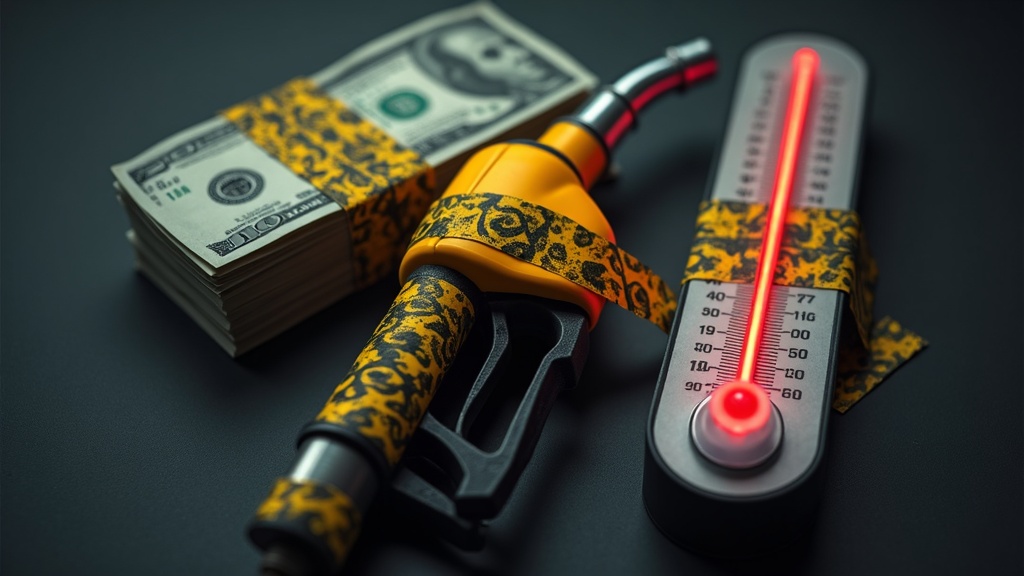
Consumer Confidence Collapses — Before the Ceasefire Even Hit
On April 11, 2026, the University of Michigan (the monthly tracker of US household sentiment) released its consumer confidence survey showing a plunge to 47.6, the lowest reading on record. This is a collapse in psychology, not just economics.
The headline index fell 10.7% from March. Current conditions and expectations both dropped by double digits. One-year inflation expectations spiked to 4.8%, up a full percentage point from March and the highest since August 2025. Five-year expectations rose to 3.4%. Survey director Joanne Hsu noted that most interviews were completed before the April 7 ceasefire between the US and Iran, meaning the data largely reflects March conditions during the conflict. Respondents blamed the Iran war for unfavorable economic changes, particularly the surge in energy prices.
The investor takeaway: sentiment surveys are backward-looking. Markets price forward expectations. If the ceasefire holds and energy prices moderate, this survey will look like a lagging indicator by mid-May. But if inflation expectations stay elevated, the Fed (US Federal Reserve, the central bank setting interest rates) has no room to cut.
CPI Jumps 3.3% — But Core Inflation Stays Contained
On April 11, 2026, the Bureau of Labor Statistics reported that the consumer price index rose 0.9% in March, pushing the 12-month inflation rate to 3.3%. This is the highest annual rate since April 2024, up from 2.4% in February.
The Iran conflict drove the headline number. Gasoline soared 21.2%, accounting for nearly three-quarters of the monthly increase. Energy prices overall jumped 10.9%. But core CPI, excluding food and energy, rose just 0.2% for the month and 2.6% annually, both 0.1 percentage point below forecasts. Services excluding energy rose 0.2% monthly and 3% annually. Shelter, a key inflation driver, climbed 0.3% monthly and 3% annually, tied for its lowest level since August 2021. Medical care, personal care, and used vehicles all posted declines. Food prices were flat for the month, up 2.7% annually, with eggs down 44.7% year-over-year.
Markets showed little reaction, with Treasury yields mixed and stock futures slightly higher. Goldman Sachs Asset Management’s global co-CIO Alexandra Wilson-Elizondo said the Fed will “look through the energy-driven noise.” Real earnings fell 0.6% in March as wage growth lagged price increases.
South Korea Passes $17.7 Billion Stimulus — Cash Hits 70% of Households
On April 10, 2026, South Korea’s National Assembly approved a 26.2 trillion-won ($17.7 billion) supplementary budget to address the economic fallout from the Middle East conflict. This is speed by legislative standards, passed just 10 days after submission.
The legislation sailed through in a 214-11 vote, with 19 abstentions. The ruling Democratic Party and main opposition People Power Party agreed to keep the budget size unchanged from the government’s proposal. About 35.8 million people will receive direct cash assistance between 100,000 won and 600,000 won per person, differentiated by income level and region, targeting the bottom 70% of earners. The parties also allocated an additional 200 billion won to ensure stable supply of naphtha, a feedstock used in petrochemical and other industries.
Cheong Wa Dae (the South Korean presidential office) praised the bipartisan cooperation. Spokesperson Kang Yu-jung said the government will implement measures including naphtha purchase support, public transportation discounts, and fuel subsidies for farmers and fishermen.
The investor read: Seoul is front-running recession risk with direct household support and industrial stabilization. If naphtha supply chains stay disrupted, Korea’s export-heavy economy faces headwinds even after the ceasefire.
Energy shocks trigger fiscal reflexes faster than monetary policy can respond. South Korea deployed $17.7 billion in ten days while the Fed debates whether to look through a 3.3% CPI print. Consumer sentiment hit a record low before the ceasefire, but core inflation stayed contained at 2.6% and shelter costs are cooling. The gap between headline panic and underlying stability creates asymmetric opportunities for capital allocators who can separate signal from noise. If energy normalizes and wage growth holds, real earnings recover by summer. If inflation expectations stay elevated at 4.8%, rate cuts disappear for 2026.
If this was useful, drop a like or comment below. More signal, less noise — every time.

AI Ludens — a creator who works with AI as if it were play.
“Ludens” is Latin for “the one who plays,”
borrowed from Johan Huizinga’s Homo Ludens.
I believe creation alongside AI is meaningful play.
Using n8n, Claude Code, and Google Cloud,
I design and operate content automation pipelines
that grow wiser with every iteration.
I build and run multiple automated media properties,
including worldsignal.site, worldbriefed.world,
and the YouTube channel “500-Year Protocol.”
From publishing to video production,
everything runs as an automated system — built with AI, beside AI.
Each article is reviewed and edited by AI Ludens before publishing to ensure factual accuracy and editorial quality
Leave a Reply