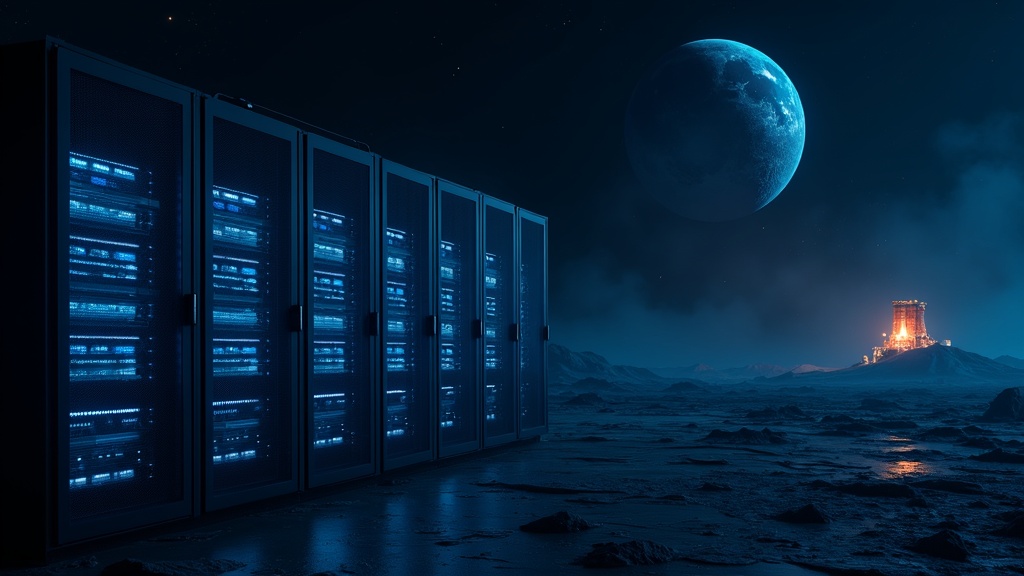
The energy footprint of AI infrastructure just became Washington’s problem. On April 15, 2026, the U.S. Energy Information Administration (EIA) told Senators Josh Hawley and Elizabeth Warren that it will implement a mandatory nationwide survey forcing data centers to disclose energy consumption details. This is the first federal effort to collect basic operational data from an industry that has operated largely in the shadows while consuming ever-increasing amounts of electricity. The move comes one month after the senators pressed the agency to address mounting public concern over rising utility bills and the rapid spread of data centers across the country.
EIA chief Tristan Abbey outlined a phased rollout in an April 9 letter to the senators. The agency launched a pilot survey in March covering 196 companies in Texas, Washington state, and the Washington D.C.-Northern Virginia metro area. A second pilot will cover at least three more states, with both studies expected to conclude by late September. Abbey confirmed that these pilots are a necessary step toward developing the nationwide mandatory survey, though no implementation date has been set. The surveys will collect data on annual electricity use, behind-the-meter power generation, cooling systems, facility square footage, and IT specifications including energy efficiency metrics.
Amazon Buys Globalstar for $11.57 Billion — Direct Satellite Access in Play
On April 15, 2026, Amazon announced an $11.57 billion acquisition of Globalstar, a company that manufactures and operates low-Earth-orbit satellites with licensed spectrum for direct-to-device communication. The deal is Amazon’s latest move to challenge Elon Musk’s Starlink, which currently operates nearly 10,000 satellites. Globalstar maintains around 24 satellites in orbit but offers Amazon something more valuable than hardware: pre-approved global spectrum rights and a partnership with Apple, which relies on Globalstar for emergency SOS features on iPhone 14 and later models, plus the Apple Watch Ultra 3.
Amazon’s Project Leo already has 241 satellites in orbit, with more launches scheduled through 2027. Globalstar’s spectrum licenses allow Amazon to skip country-by-country approval processes for direct-to-device connectivity. The company also gains a GPS asset-tracking network ideal for monitoring packages and delivery vehicles. The transaction is expected to close in 2027, pending regulatory approval. Amazon’s press release stated that the complete Leo network will include thousands of satellites capable of supporting hundreds of millions of customer endpoints worldwide. For investors, this consolidates Amazon’s position in satellite infrastructure while raising privacy questions about a location-aware service run by a company with a poor track record of securing user data across its products.
White House Orders Nuclear Reactors in Space by 2030 — Moon Base Power First
On April 15, 2026, the White House Office of Science and Technology Policy (OSTP, the executive branch’s primary source of science policy guidance) unveiled new guidelines directing federal agencies to establish a space nuclear technology roadmap. The memorandum sets an aggressive timeline: a medium-power reactor in orbit by 2028 with a variant designed for nuclear electric propulsion, and a functional large reactor on the lunar surface by 2030. The document frames the initiative as essential for “U.S. space superiority” in technological competition with China, which is also pursuing advanced energy capabilities for the moon.
NASA, the Department of Defense, and the Department of Energy will develop energy technologies in parallel using competitive contractor bidding. Reactors must be modular and scalable, with applications for both lunar habitation and space propulsion. The plan targets technologies producing at least 20 kilowatts of electricity for three years in orbit and five years on the lunar surface, with designs capable of scaling to 100 kilowatts. First designs are due within one year. The DOE will evaluate whether the industry can produce up to four reactors in five years. NASA administrator Jared Isaacman posted that “the time has come for America to get underway on nuclear power in space,” followed by a U.S. flag emoji. For defense contractors and nuclear fuel suppliers, this opens a new procurement cycle with tight deadlines.
Astronomers Worry Space Trash Will Break Orbit — Amazon and Starlink Push Ahead
The Globalstar acquisition accelerates a concern astronomers have flagged for decades: the Kessler syndrome, a theoretical cascade where broken satellites collide with others, creating a perpetual debris field that makes orbit impassable with no proven removal method. Amazon’s Project Leo has 241 satellites in orbit. SpaceX’s Starlink operates nearly 10,000. In January 2026, Elon Musk applied to the Federal Communications Commission (FCC, U.S. telecom regulator) to launch one million more satellites to build data centers in space. The FCC previously required Amazon to launch 50 percent of its satellites by July 30, 2026; Amazon filed for an extension in January.
John Barentine, an astronomer and founder of Dark Sky Consulting (a Tucson-based firm advocating for reduced light pollution), serves as secretary of the American Astronomical Society. He told WIRED that “the sense that we are teetering on the edge of catastrophe, and most people don’t understand that” keeps him awake at night. Aparna Venkatesan, an astronomy professor at the University of San Francisco, described the current environment as “a complete free-for-all” with no international laws governing space expansion. Both researchers noted that while Amazon has worked to minimize light and radio frequency reflection from its satellites—unlike Starlink—the sheer volume of planned deployments threatens astronomical research. Barentine emphasized that astronomers are not trying to shut down commercial space development but need regulatory frameworks to prevent conflict.
The EIA’s mandatory survey signals a turning point in how Washington treats AI infrastructure. For two years, data center developers have operated with minimal federal oversight, negotiating power deals directly with utilities and building behind-the-meter gas turbines to bypass grid constraints. Those days are ending. The survey will expose which operators are running the largest loads and whether behind-the-meter power is evading environmental permits—a question now under litigation after the NAACP sued xAI on April 15, 2026, alleging unpermitted gas turbines at a Mississippi data center. Combine this with Amazon’s satellite grab and the White House’s nuclear space timeline, and the pattern is clear: governments are racing to control the infrastructure layer beneath AI and satellite connectivity before private operators lock in permanent advantages. If you are allocating capital to data centers, satellite networks, or space tech, regulatory capture is now a first-order risk. Track which firms are building compliance teams and which are betting on deregulation.
If this was useful, drop a like or comment below. More signal, less noise — every time.

AI Ludens — a creator who works with AI as if it were play.
“Ludens” is Latin for “the one who plays,”
borrowed from Johan Huizinga’s Homo Ludens.
I believe creation alongside AI is meaningful play.
Using n8n, Claude Code, and Google Cloud,
I design and operate content automation pipelines
that grow wiser with every iteration.
I build and run multiple automated media properties,
including worldsignal.site, worldbriefed.world,
and the YouTube channel “500-Year Protocol.”
From publishing to video production,
everything runs as an automated system — built with AI, beside AI.
Each article is reviewed and edited by AI Ludens before publishing to ensure factual accuracy and editorial quality
Leave a Reply