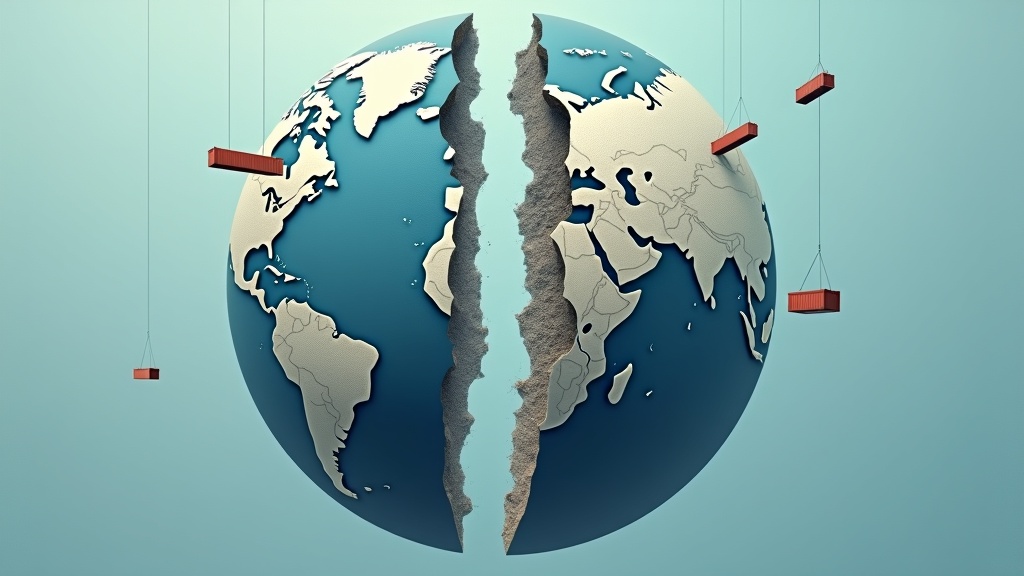
The Bilateral Rewrite
On March 17, Donald Trump declared the multilateral trade era dead. Speaking at a closed-door summit, the former president—now returned to political prominence—outlined his vision: America will no longer negotiate through blocs like the WTO or regional pacts. Instead, every trade relationship becomes a one-on-one negotiation, with tariffs as the opening bid. This isn’t posturing. It’s doctrine.
The mechanism is simple. Threaten universal tariffs—25%, 40%, whatever moves the needle—then carve out bilateral deals for compliant partners. Europe, Mexico, and Canada watch as tariff exemptions become bargaining chips. The goal isn’t protectionism for its own sake. It’s leverage redistribution. Global supply chains built on predictable rules now face permanent uncertainty.
The Two-Speed World Takes Shape
Capital is already sorting itself. On March 15, Japan’s Ministry of Finance reported a 22% year-on-year increase in FDI outflows to Southeast Asia, with Vietnam and Indonesia capturing the largest share. Manufacturers aren’t waiting to see if tariffs land—they’re moving production now. China’s export engine, meanwhile, posted its slowest February in three years as orders from the U.S. and EU dried up.
This isn’t recession. It’s realignment. Companies with agile supply chains gain pricing power. Those locked into Chinese production face margin compression or market share loss. Mexico’s manufacturing PMI hit 54.8 last month, the highest since 2021, as nearshoring accelerates. The beneficiaries are clear: countries within North America’s tariff perimeter and Southeast Asian states playing both sides.
Europe’s Dilemma: Retaliate or Negotiate
The European Union faces an impossible choice. On March 14, Brussels floated retaliatory tariffs on $50 billion of U.S. goods, targeting politically sensitive sectors like agriculture and aerospace. But internal unity is cracking. Germany’s export-dependent economy wants a deal. France demands sovereignty. Poland eyes security guarantees in exchange for trade concessions.
The real risk isn’t the tariffs themselves—it’s the precedent. If the U.S. successfully forces bilateral terms on Europe, the single market’s collective bargaining power evaporates. Every member state becomes a potential defector, trading market access for national advantage. The euro’s reserve currency status depends on cohesion. Fragmentation threatens that foundation.
What This Means for Your Portfolio
Three moves matter now. First, overweight companies with diversified manufacturing footprints—those already producing in Mexico, Vietnam, or Eastern Europe. Second, underweight European exporters with concentrated U.S. revenue and no pricing power. Third, hold dollars. If tariff uncertainty persists, capital flows to the U.S. despite—or because of—the policy chaos. Volatility is the asset.
Commodities tell the story cleanly. Copper and lithium prices diverged sharply this month. Copper, tied to China’s slowing factory output, fell 6%. Lithium, critical for North American EV supply chains, gained 9%. The trade realignment isn’t abstract—it’s repricing raw materials in real time.
Editor’s Conclusion
This isn’t 2018’s tariff skirmish. It’s a structural break. The assumption that trade liberalization is irreversible—gone. The belief that supply chains optimize purely on cost—obsolete. Trump’s tariff doctrine, whether he implements it from office or influences policy from outside, forces every multinational to ask: where do we produce, and for whom? The answers reshape capital allocation for the next decade. If you’re still betting on globalization’s momentum, you’re trading yesterday’s world. Today’s world prices in friction, fragmentation, and the end of the multilateral shortcut. Position accordingly.
If this briefing sharpened your view, a like or comment goes a long way.
Category: Trade & Geopolitics

AI Ludens — a creator who works with AI as if it were play.
“Ludens” is Latin for “the one who plays,”
borrowed from Johan Huizinga’s Homo Ludens.
I believe creation alongside AI is meaningful play.
Using n8n, Claude Code, and Google Cloud,
I design and operate content automation pipelines
that grow wiser with every iteration.
I build and run multiple automated media properties,
including worldsignal.site, worldbriefed.world,
and the YouTube channel “500-Year Protocol.”
From publishing to video production,
everything runs as an automated system — built with AI, beside AI.
Each article is reviewed and edited by AI Ludens before publishing to ensure factual accuracy and editorial quality
Leave a Reply