Category: Markets & Economy

  • OECD Says US Inflation Hits 4.2% — Fed Missed by 1.5 Points

    article image

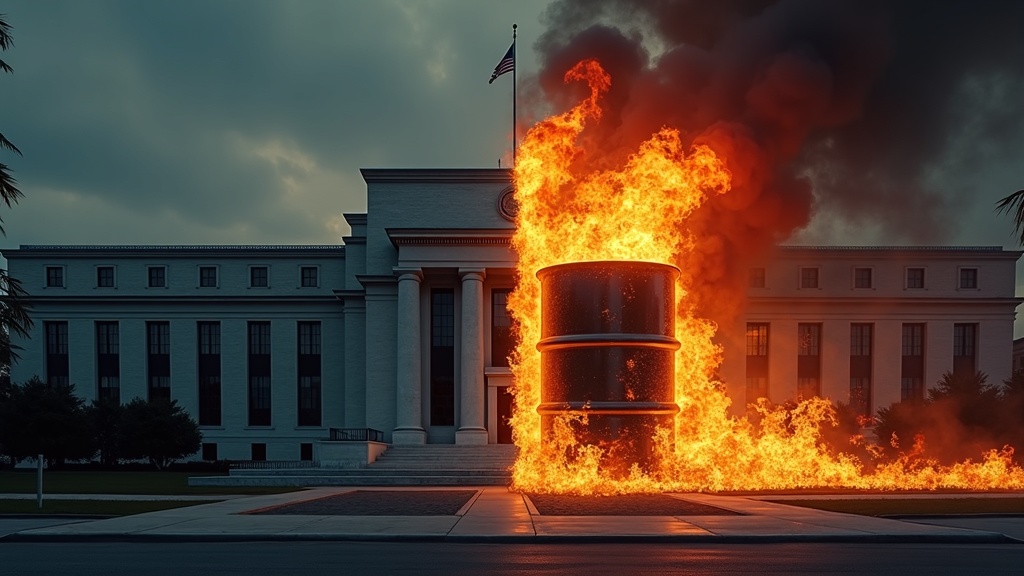
    OECD Projects 4.2% US Inflation — 1.5 Points Above Fed’s Own Forecast

    On March 27, 2026, the OECD (Organization for Economic Cooperation and Development, a Paris-based policy group tracking 38 advanced economies) released its periodic economic update projecting US all-items inflation at 4.2% for this year. This is a sharp revision from its prior estimate of 2.8% — and sits 1.5 percentage points above the 2.7% the Federal Reserve (US central bank setting interest rates) forecast just last week.

    The gap matters because it challenges the Fed’s baseline assumption that inflation remains manageable without rate cuts. The OECD attributes the jump to two forces: the ongoing conflict involving Iran and sustained price effects from US tariffs, even after recent reductions. Energy costs remain elevated as the Strait of Hormuz stays effectively closed, disrupting global oil supply. The report warns that a prolonged period of higher energy prices will add markedly to business costs and consumer price inflation, with adverse consequences for growth.

    However, the OECD expects a steep drop in 2027 — US inflation falling to 1.6%, below the Fed’s 2% target and its own 2.2% estimate. Core inflation, which excludes food and energy, is pegged at 2.8% this year and 2.4% next. The group now expects the Fed to hold rates flat through 2027, reflecting rising headline inflation in the near term and core inflation projected to remain above target. The agency added that central banks need to remain vigilant, and policy adjustment may be needed if there are signs of broader price pressures or weaker labor market conditions. US GDP growth is forecast at 2% this year, easing to 1.7% in 2027, after slowing sharply to a 0.7% rate in Q4 2025.

    Trump Extends Strike Pause on Iran — 10 More Days for Talks

    On March 26, 2026, President Donald Trump announced a 10-day extension of his pause on US military strikes against Iran’s energy infrastructure, pushing the deadline to 8 p.m. Eastern Time on April 6. This is a direct response to an Iranian government request as indirect negotiations continue through Pakistani mediators.

    Trump had initially threatened on Saturday to obliterate Iran’s power plants if Tehran did not fully reopen the Strait of Hormuz within 48 hours, then postponed strikes for five days on Monday. The latest extension reflects the administration’s search for an off-ramp from the conflict amid rising oil prices and inflation concerns ahead of US midterm elections. Washington has presented a 15-point peace plan covering Iran’s nuclear and ballistic missile programs and uranium stockpiles, among other issues. Iranian Foreign Minister Abbas Araghchi acknowledged indirect messages via intermediaries but said it does not amount to formal negotiations.

    Despite diplomatic efforts, the Pentagon has ordered the deployment of thousands of additional troops to the Middle East to support operations against Iran — a signal that military pressure remains part of the strategy. Trump warned Iran in a separate post to get serious soon about a deal before it is too late. For investors, the extended pause buys time for markets to stabilize, but the threat of renewed strikes keeps a risk premium embedded in energy prices and volatility indices.

    South Korea Business Sentiment Drops — Iran Conflict and Raw Material Costs Weigh

    On March 27, 2026, the Bank of Korea (South Korea’s central bank) released its monthly business sentiment survey showing the Composite Business Sentiment Index for all industries at 94.1 in March, down 0.1 point from February. A reading below 100 indicates pessimists outnumber optimists.

    The index for manufacturers held flat at 97.1, while non-manufacturers slipped 0.2 point to 92. The April outlook deteriorated more sharply — the projection index for next month fell 4.5 points to 93.1, with manufacturers down 3 points to 95.9 and non-manufacturers down 5.6 points to 91.2. A Bank of Korea official said rising raw material costs and heightened uncertainty stemming from the conflict outweighed strong IT exports.

    Global oil prices have risen markedly as US-Israeli strikes on Iran, which began late last month, escalated into a broader regional conflict. The effective closure of the Strait of Hormuz has disrupted global oil supplies, hitting import-dependent economies like South Korea particularly hard. The survey, conducted earlier in March, covered 3,223 companies including 1,790 manufacturers. The deteriorating forward outlook suggests businesses are bracing for prolonged cost pressures and demand uncertainty, even as semiconductor exports — a key South Korean strength — remain robust. For multinationals with supply chains in Northeast Asia, this is a leading indicator of margin compression ahead.

    The Iran conflict is no longer a regional headline — it’s a global inflation event with a Fed credibility problem attached. The OECD’s 4.2% US inflation call, 1.5 points above the Fed’s own forecast, tells you that energy shocks are bleeding into core prices faster than central banks anticipated. Trump’s 10-day strike pause buys time, but South Korea’s sliding business sentiment and the Pentagon’s troop deployments signal that markets are pricing in prolonged disruption, not resolution. If oil stays elevated and the Fed holds rates flat through 2027, real rates stay negative in 2026 — a tailwind for hard assets and a headwind for fixed income. Watch core CPI prints in April and May. If they tick up, the Fed’s credibility gap widens and vol reprices across duration and equities.

    If this was useful, drop a like or comment below. More signal, less noise — every time.

  • Recession Odds Hit 48% as War Drags On

    article image

    US Recession Risk Jumps to 48% — War and Jobs Drive the Shift

    On March 26, 2026, Moody’s Analytics raised its 12-month recession probability to 48.6%, up from the normal baseline of around 20%. This is not a forecast — it’s a flashing amber light. Goldman Sachs (the Wall Street investment bank) now puts the odds at 30%, while Wilmington Trust sits at 45%. The driver: the Iran war has blocked oil flows through the Strait of Hormuz (the narrow passage handling roughly one-fifth of global oil supply), pushing US pump prices up $1.02 per gallon — a 35% jump in one month. Add a labor market that created just 116,000 jobs in all of 2025 and lost 92,000 in February, and the path to expansion is narrowing fast. Mark Zandi, chief economist at Moody’s, warned that if oil prices hold through Memorial Day, recession becomes the base case. The Fed (US Federal Reserve, the central bank setting interest rates) held rates at 3.5%-3.75% last week, but Chair Jerome Powell refused to use the word “stagflation” — even as twin threats to growth and inflation mount. For investors: watch energy through Q2. If crude stays elevated, consumer spending — which drives two-thirds of US GDP — will crack.

    UK Inflation Holds at 3% — But March Will Tell the Real Story

    On March 26, 2026, the UK Office for National Statistics reported February inflation steady at 3%, unchanged from January. This is the last clean read before the Iran war began. Core inflation (excluding food, energy, alcohol, and tobacco) ticked up to 3.2% from 3.1%, driven by clothing prices. But petrol costs fell — because data collection closed before US and Israeli airstrikes on Iran in late February triggered the blockade. Economists now expect a “brutal inflation surge” once March data arrives. Deutsche Bank’s Chief UK Economist Sanjay Raja warned to “brace for impact,” with headline inflation likely to breach 4% by summer. The Bank of England (the UK central bank) voted unanimously to hold rates at 3.75% last week, citing upward inflation risk and weaker growth. The UK is unusually exposed: it imports most of its oil and gas, and has minimal storage capacity. Markets had priced in two rate cuts this year; they’re now pricing in two hikes. For businesses: April will see a temporary reprieve as government cuts to green levies lower household energy bills. After that, cost pressures return with force.

    ECB Holds Rates — Europe’s Central Banks All Pause as War Clouds Outlook

    On March 26, 2026, the European Central Bank kept its deposit facility rate at 2%, saying the Iran conflict has made the outlook “significantly more uncertain.” The same day, the Bank of England, Sweden’s Riksbank (Sweden’s central bank), and the Swiss National Bank all held rates steady. The ECB revised its 2026 inflation forecast to 2.6%, up from the December projection of just under 2%, blaming energy price shocks. President Christine Lagarde walked back her February assurance that the euro zone was “in a good place,” telling reporters the bloc is now merely “well-equipped to deal with a major shock.” The BOE flagged “upside risks” to inflation from higher energy and warned of “second-round effects” in wage and price-setting if oil stays elevated. The Swiss National Bank — which cut rates to 0% earlier this cycle — said it stands ready to intervene in foreign exchange markets to prevent franc appreciation that would threaten price stability. Chair Martin Schlegel clarified any intervention would target monetary stability, not export competitiveness. For multinationals: European rate cuts are off the table through mid-year. If the war drags into Q3, hikes are back in play.

    South Korea Doubles Fuel Tax Cuts — Diesel Gets 25% Relief Through May

    On March 26, 2026, South Korea’s finance ministry announced it will more than double temporary fuel tax cuts, raising the diesel reduction to 25% and gasoline to 15%, effective April 1 but applied retroactively from March 27. The move cuts the per-liter tax by 65 won for gasoline and 87 won for diesel (including value-added tax), bringing diesel to 436 won per liter. Finance Minister Koo Yun-choel said diesel is “the most essential fuel for industry, logistics and everyday livelihoods,” and noted that global diesel prices are rising faster than gasoline. South Korea — which imports nearly all its energy — is acutely vulnerable to external shocks. The cuts, first introduced in November 2021, had been set to expire in April but will now run through May. Under law, fuel taxes can be reduced by up to 37%, leaving room for deeper cuts if the conflict intensifies. The government will reassess in May based on oil prices and the trajectory of the war. For regional supply chains: Seoul is signaling it will prioritize industrial continuity over tax revenue. If Japan or Taiwan follow with similar relief, it confirms Asia is bracing for a prolonged energy squeeze.

    The war in Iran is no longer a geopolitical headline — it’s a repricing event. Four economies on three continents just rewrote their inflation and recession models in the same week. When Moody’s puts US recession odds near a coin flip, when the ECB abandons its “good place” narrative, and when Seoul doubles fuel subsidies with legal headroom to go further, the message is clear: central banks are shifting from inflation-fighting mode to damage control. Energy shocks have preceded every US recession since the Great Depression, save one. This time, the shock is paired with a labor market that created virtually no net jobs last year and a consumer whose spending has been propped up by stock market wealth effects — now under pressure as equities slide. Watch the next 60 days. If oil holds above current levels through Memorial Day, Zandi’s recession call becomes consensus. If the BOE’s inflation hits 4% by summer, hikes return to the table across Europe. And if South Korea extends cuts past May, it confirms Asia expects this to run into Q3. Position accordingly.

    If this was useful, drop a like or comment below. More signal, less noise — every time.

  • LA Jury Hands Meta and Google a $3 Million Bill — And Opens the Floodgates

    article image

  • U.S. Recession Odds Hit 48% — War Risk Reprices Everything

    article image

    Recession Probability Doubles — Economists Rewrite 12-Month Forecasts

    On March 25, 2026, Moody’s Analytics raised its 12-month U.S. recession probability to 48.6%, more than double the typical 20% baseline. This is a risk repricing, not a forecast. Goldman Sachs (Wall Street’s largest investment bank) lifted its estimate to 30%, while Wilmington Trust put the odds at 45%. EY Parthenon set it at 40% with a caveat: the figure could spike if the Iran conflict drags past Memorial Day.

    Mark Zandi, chief economist at Moody’s Analytics, warned that if oil prices stay elevated through the end of the second quarter, the economy will tip into contraction. The U.S. labor market created just 116,000 jobs in all of 2025 and lost 92,000 in February. Outside health care — which added over 700,000 positions — payrolls declined by more than half a million. Gasoline prices jumped $1.02 per gallon in the past month, a 35% surge. Oil shocks have preceded virtually every U.S. recession since the Great Depression, excluding the Covid downturn. Consumer sentiment reflects the unease: 65% of respondents in a March NerdWallet survey expect a recession within 12 months, up 6 points from February.

    UK Inflation Holds at 3% — Then the War Hit

    On March 26, 2026, the Office for National Statistics reported UK inflation at 3% in February, unchanged from January. This is the last calm reading before the storm. Core inflation — stripping out energy, food, alcohol, and tobacco — rose to 3.2% from 3.1%. The data covers the final period before U.S.-Israeli airstrikes on Iran in late February triggered a near-total blockade of the Strait of Hormuz (a maritime chokepoint for Middle East oil and gas exports).

    UK economists now warn of a “brutal inflation surge.” ICAEW Chief Economist Suren Thiru expects the headline rate to breach 4% by summer. Deutsche Bank’s Sanjay Raja told clients to “brace for impact.” The Bank of England held its benchmark rate at 3.75% on March 19, but markets have reversed expectations. Two rate cuts priced in February are now two potential hikes by year-end. The UK relies heavily on oil and gas imports and lacks storage capacity, making it uniquely exposed. A government cut to green levies will temporarily lower household energy bills in April, but the relief will be brief. The British pound traded down 0.17% at $1.3385 after the release.

    Four Central Banks Hold — But ECB and BOE Signal Very Different Paths

    On March 20, 2026, the European Central Bank held its deposit facility rate at 2%, warning that the Iran war created “upside risks for inflation and downside risks for economic growth.” This is a two-front defense. ECB President Christine Lagarde reversed her February claim that the euro zone was “in a good place,” telling reporters the bank is “well-positioned” to handle a major shock but no longer in calm waters. The ECB revised 2026 inflation expectations to 2.6%, up from near 2% in December.

    The Bank of England also held at 3.75%, voting unanimously to pause. The statement flagged “increased risk of domestic inflationary pressures through second-round effects in wage and price-setting.” Switzerland’s National Bank kept rates at 0.00% and announced “heightened willingness” to intervene in foreign exchange markets to prevent rapid franc appreciation. Chairman Martin Schlegel told CNBC any intervention would serve monetary policy, not export competitiveness. Sweden’s Riksbank also held steady. Markets reacted sharply: London’s FTSE 100 dropped 2.5% after the BOE decision, while UK 10-year gilt yields rose 14 basis points to 4.874%. The BOE faces a uniquely British squeeze — stubborn inflation, a weakening labor market, and minimal fiscal room. Europe’s central banks enjoyed falling inflation before the war. That script is now in the shredder.

    Trump-Xi Summit Rescheduled — May 14-15 in Beijing

    On March 25, 2026, the White House announced that President Donald Trump will meet Chinese President Xi Jinping in Beijing on May 14-15, after the summit was postponed due to the U.S.-Israeli war against Iran. This is a diplomatic reset under duress. White House press secretary Karoline Leavitt said First Lady Melania Trump will accompany the president, and Xi will visit Washington later this year.

    The Trump administration seeks to address trade in agricultural products and critical minerals with Beijing. The original summit had reportedly been scheduled for March 31-April 2 but was delayed as Trump managed combat operations in the Middle East. Leavitt said there was no precondition tied to the Iran conflict for rescheduling — Xi understood the president’s need to stay in Washington during active operations. Speculation had circulated that the trip would occur only after the war de-escalated. With midterm elections approaching and recession odds climbing, the White House is now looking for an off-ramp from the conflict. Control of Congress is at stake. The May summit will test whether Trump can extract concessions from China while managing domestic economic fallout from energy shocks. Markets are watching both.

    War risk doesn’t sit patiently in one column of a spreadsheet. It reprices everything — rate expectations, inflation forecasts, recession probabilities, central bank credibility. The Iran conflict has blown apart the February consensus. Moody’s model has recession odds near 50%. UK inflation has a “brutal surge” baked in. The BOE reversed from two cuts to two hikes in a matter of weeks. The ECB ditched “good place” language. Trump postponed a China summit to focus on combat operations — and rescheduled it for May because the midterms loom. Every forecast now carries a giant asterisk: _if the war ends soon_. If oil stays elevated past Memorial Day, the U.S. tips into contraction, according to Moody’s. If the Strait of Hormuz stays blocked, UK inflation breaches 4%. If second-round wage effects take hold, central banks hike into a slowdown. This is not 2022 redux — but it’s not normal either. Track energy prices daily. Watch labor data monthly. Rewrite your assumptions quarterly. The expansion is still alive, but the path through is “increasingly narrow,” as Zandi put it. Positioning for that narrow path means stress-testing portfolios against prolonged disruption, not just a quick resolution.

    If this was useful, drop a like or comment below. More signal, less noise — every time.

  • Recession Odds Hit 48% — Fed Stares Down a War-Driven Stagflation Trap

    U.S. Recession Risk Jumps to 48% — War and Jobs Drive the Surge

    On March 25, 2026, Moody’s Analytics (a risk assessment and economic forecasting firm) raised its 12-month U.S. recession probability to 48.6%. This is more than double the normal peacetime baseline of 20%. Goldman Sachs followed with a 30% estimate, while Wilmington Trust pegged it at 45%. The catalyst is twofold: the ongoing U.S.-Israeli war against Iran has blocked the Strait of Hormuz (a maritime chokepoint for one-fifth of global oil), sending pump prices up $1.02 per gallon — a 35% jump in one month — and a labor market that added just 116,000 jobs for all of 2025, losing 92,000 in February alone. Outside health care, which added over 700,000 positions, payrolls fell by more than half a million. Mark Zandi, Moody’s chief economist, warned that if oil prices hold through Memorial Day, “that’ll push us into recession.” Fed Chair Jerome Powell rejected the term “stagflation,” reserving it for the 1970s when unemployment was in double digits. But the combination of rising prices and sagging job growth has already spooked consumers: 65% of NerdWallet survey respondents now expect a recession within 12 months.

    U.K. Inflation Holds at 3% — But a “Brutal Surge” Looms

    On March 26, 2026, the U.K. Office for National Statistics reported February inflation unchanged at 3%, with core inflation (excluding energy, food, alcohol, and tobacco) ticking up to 3.2% from 3.1%. These figures predate the Iran war. Economists warned the calm is deceptive. ICAEW Chief Economist Suren Thiru called the data “a false flag,” predicting a “brutal inflation surge” could push the headline rate above 4% by summer once energy shocks feed through. The Bank of England (BoE, the U.K. central bank setting interest rates) held its benchmark rate at 3.75% last week and signaled it is “alert to the increased risk of domestic inflationary pressures through second-round effects in wage and price-setting.” Deutsche Bank’s U.K. economist Sanjay Raja told clients to “brace for impact.” The pound slipped 0.17% to $1.3385 after the release. Unlike the 2022 energy crisis, analysts say a weaker labor market may prevent wage spirals — but the BoE now faces a choice between hiking to fight inflation or holding steady to protect fragile employment.

    ECB, BoE, SNB All Hold Rates — But Markets Now Price Hikes

    On March 26, 2026, the European Central Bank (ECB, the euro zone’s central bank), Bank of England, Swiss National Bank (SNB), and Sweden’s Riksbank all kept interest rates unchanged. The ECB left its deposit facility rate at 2%, revised 2026 inflation forecasts up to 2.6% from just under 2% in December, and dropped ECB President Christine Lagarde’s prior assurance that the euro zone was “in a good place.” She told CNBC, “We are starting from a good base… well-positioned to deal with a major shock that is unfolding.” The BoE said it is now assessing “the weakening in economic activity that is likely to result from higher energy costs.” The SNB held its policy rate at 0.00% but warned it has a “heightened willingness to intervene in the foreign exchange market” to counter rapid Swiss franc appreciation. Traders responded by repricing U.K. rate expectations: two cuts vanished, replaced by bets on up to two hikes this year. London’s FTSE 100 fell 2.5% intraday, while the 10-year gilt yield climbed 14 basis points to 4.874%. Central banks framed their statements as vigilance, but markets heard capitulation.

    Trump-Xi Summit Set for May 14-15 in Beijing — War Delayed the Date

    On March 25, 2026, the White House announced that President Donald Trump will meet Chinese President Xi Jinping in Beijing on May 14-15, after the summit was postponed due to the U.S.-Israeli war against Iran. Press Secretary Karoline Leavitt said First Lady Melania Trump will join, and the Trumps will host Xi and Madam Peng in Washington later this year. The original dates had reportedly been set for March 31-April 2. Leavitt confirmed there was no precondition tied to the Middle East conflict for rescheduling: “President Xi understood that it’s very important for the president to be here throughout these combat operations.” The administration is seeking off-ramps from the war as economic fallout mounts ahead of midterm elections, where control of Congress is at stake. The summit agenda is expected to cover trade in agricultural products and critical minerals, two areas where U.S. dependence on Chinese supply chains has become a vulnerability. The delay underscores how geopolitical risk is now dictating the calendar for the world’s two largest economies.

    War is rewriting the central bank playbook faster than policymakers can adjust their models. The U.S. job market is running on one engine — health care — while oil shocks push recession odds to coin-flip territory. Europe’s central banks are holding rates steady while markets price hikes, a divergence that rarely ends quietly. And the White House just subordinated a superpower summit to battlefield tactics in the Persian Gulf. If you’re allocating capital for the next six months, assume volatility is the baseline, not the exception. Watch inflation prints in April, repositioning in energy-sensitive sectors, and whether central banks start hiking before the economic data forces their hand. The next quarter will separate the portfolios that hedged geopolitical risk from those that assumed diplomacy would arrive on schedule.

  • Arm Ships Its Own Chips — Customers Watch Closely

    article image

    Kleiner Perkins Goes All-In — $3.5 Billion on AI’s Next Wave

    On March 24, 2026, Kleiner Perkins (a Silicon Valley venture firm known for early bets on Amazon and Google) announced it raised $3.5 billion across two funds — $1 billion for early-stage deals and $2.5 billion for late-stage growth. This is a 75% jump from the firm’s $2 billion raise less than two years ago. The timing rewards shrewd positioning: Kleiner backed Together AI, Harvey, and OpenEvidence early, plus holds stakes in Anthropic and SpaceX, both expected to go public this year. The firm also cashed out handsomely from Figma’s 2025 IPO after leading its $25 million Series B in 2018, and reportedly scored returns when portfolio company Windsurf was acqui-hired by Google last summer. Kleiner now operates with just five partners after recent departures — Ev Randle left for Benchmark, and Annie Case shifted to an advisory role. The raise mirrors a broader pattern: Thrive Capital secured $10 billion, General Catalyst is targeting a similar amount, and Founders Fund closed $6 billion for its fourth growth vehicle. For allocators, the message is clear — mega-funds are betting AI exits will dwarf the last decade’s software returns, and they’re willing to concentrate capital to capture them.

    Amazon Buys a Kid-Size Robot — And Plans to Send It Home

    On March 24, 2026, Amazon confirmed it acquired Fauna Robotics, a two-year-old startup founded by former Meta and Google engineers developing kid-size humanoid robots for the home. Terms were undisclosed. Fauna began shipping its first product — a 59-pound bipedal robot called Sprout — earlier this year to select R&D partners. All employees, including both founders, will join Amazon in New York City. An Amazon spokesperson said the company is “excited about Fauna’s vision to build capable, safe, and fun robots for everyone,” citing plans to “invent new ways to make our customers’ lives better and easier.” This marks Amazon’s second robotics acquisition this month — it also bought Rivr, a Zurich-based startup known for its stair-climbing delivery robot. Amazon has been steadily expanding its robotics footprint beyond warehouses, and Fauna’s consumer-facing hardware fits a broader push into ambient home presence. For investors, the pattern is consistent: Amazon absorbs promising hardware teams early, integrates them quietly, and ships products at scale years later. The kid-size form factor and the emphasis on “fun” suggest Amazon is testing a category adjacent to Alexa — a physical agent that moves through the home rather than sits stationary.

    Arm Ships Its Own Chips — And Becomes Its Customers’ Rival

    On March 24, 2026, Arm (the UK-based chip design firm majority-owned by SoftBank) announced it is producing its own semiconductors, a sharp departure from its decades-long licensing model. Speaking in San Francisco, CEO Rene Haas unveiled the Arm AGI CPU, a chip designed for agentic AI tasks in data centers, fabricated by Taiwan Semiconductor Manufacturing Corporation (the world’s leading semiconductor foundry) using TSMC’s 3nm process. Arm claims the chip delivers better performance per watt than the latest x86 chips from Intel and AMD, promising billions in electricity savings. Meta has received samples and committed to buying the chip; OpenAI, SAP, Cerebras, Cloudflare, SK Telecom, and Rebellions have also agreed to purchase it. Full production availability is expected in the second half of 2026. Arm projects the global data center CPU market will grow from $25 billion this year to $60 billion by 2030 — or closer to $100 billion when agentic AI workloads are included. The risk is obvious: Arm now competes directly with customers like Intel and AMD, who license its designs and may view the move as encroachment. For now, Arm is targeting a narrow niche — streamlined CPUs for AI agents — but the trajectory points toward broader general-purpose offerings, which would escalate the collision.

    A Judge Called the Pentagon’s Bluff on Anthropic

    On March 24, 2026, US District Judge Rita Lin questioned whether the Pentagon (now called the Department of War, or DoW) was illegally punishing Anthropic (the AI safety-focused startup backed by Google and Spark Capital) for restricting military use of its AI tools. During a San Francisco court hearing on Anthropic’s request for a temporary injunction, Lin said the government’s designation of Anthropic as a supply-chain risk “looks like an attempt to cripple Anthropic” and “looks [the department] is punishing Anthropic for trying to bring public scrutiny to this contract dispute, which of course would be a violation of the First Amendment.” The designation followed Anthropic’s push for limitations on how its AI model Claude could be used by the military. Defense Secretary Pete Hegseth posted on social media that “no contractor, supplier, or partner that does business with the United States military may conduct any commercial activity with Anthropic,” though the administration later acknowledged Hegseth has no legal authority to enforce that broadly. Lin described the supply-chain-risk designation as “extraordinary” and typically reserved for foreign adversaries and terrorists. She said it was “troubling” that the directives “don’t seem to be tailored to stated national security concerns.” A ruling on the injunction is expected within days. The Pentagon says it is replacing Anthropic technologies with alternatives from Google, OpenAI, and xAI. For investors, the case clarifies the risks of refusing government contracts on ethical grounds — the state can retaliate with tools designed for hostile actors, and courts may not intervene quickly enough to prevent customer flight.

    These four moves — Kleiner’s mega-raise, Amazon’s humanoid bet, Arm’s pivot into silicon production, and the Pentagon’s pressure campaign against Anthropic — all point in the same direction: capital is concentrating in AI infrastructure and deployment at unprecedented speed, and companies that control the stack vertically are winning. The firms raising the most, acquiring the fastest, and integrating deepest are the ones expecting exits or monopoly rents large enough to justify the risk. The only counterforce visible today is legal — and it’s trailing far behind the pace of commercial consolidation. If this was useful, drop a like or comment below. More signal, less noise — every time.

  • The Pentagon Just Declared War on Silicon Valley

    article image

    Kleiner Perkins Raises $3.5 Billion on a Handful of AI Bets

    On Tuesday, Kleiner Perkins announced it raised $3.5 billion across two funds — $1 billion for early-stage ventures and $2.5 billion for late-stage growth. This is a 75% jump from its $2 billion fundraise less than two years ago. The firm, founded in 1972, now operates with just five partners after recent departures — Ev Randle left for Benchmark, and Annie Case moved to an advisory role. The lift comes from early positions in Together AI, Harvey, OpenEvidence, Anthropic, and SpaceX (the latter two expected to IPO this year). Kleiner also captured returns from Figma’s IPO last year, where it led the $25 million Series B in 2018, and reportedly profited when portfolio company Windsurf was acqui-hired by Google last summer.

    The takeaway: lean teams with concentrated exposure to AI infrastructure are attracting outsize capital. Kleiner is betting the next decade belongs to picks-and-shovels plays around model builders and deployment platforms. For LPs, the question is whether five partners can deploy $3.5 billion without diluting returns — or whether this is a final repricing before generalist firms lose access to the best AI deals altogether.

    Amazon Buys Two Robotics Startups in Two Weeks

    Amazon confirmed it acquired Fauna Robotics, a two-year-old startup building kid-size humanoid robots for the home. The deal follows Amazon’s acquisition earlier this month of Rivr, a Zurich-based autonomous robotics firm known for its stair-climbing delivery robot. Terms of neither deal were disclosed. Fauna began shipping its first product, a 59-pound bipedal robot called Sprout, earlier this year to select R&D partners. Both founding teams — ex-Meta and ex-Google engineers in Fauna’s case — will join Amazon in New York City.

    Amazon has historically preferred internal development or licensing over outright acquisition in robotics. The shift signals urgency. The company is racing to automate last-mile delivery and in-home services before Tesla, Figure, or Chinese manufacturers dominate the form factor. Fauna’s consumer-scale humanoids and Rivr’s navigation stack could merge into a unified platform for package delivery, elder care, or warehousePickPack 2.0. For operators, this is a reminder that Amazon rarely buys for revenue — it buys to collapse timelines and lock out competitors. If you’re building in robotics and Amazon hasn’t called, you’re either too early or already obsolete.

    Arm Breaks Its Own Business Model and Starts Selling Chips

    On Tuesday, Arm announced it is producing its own semiconductors — a break from its 30-year model of licensing chip designs to manufacturers. CEO Rene Haas unveiled the Arm AGI CPU at an event in San Francisco, describing it as the world’s most efficient agentic CPU. The chip is fabricated by Taiwan Semiconductor Manufacturing Corporation using its 3nm process and is designed to handle AI agent workloads in data centers. Meta has received samples; OpenAI, SAP, Cerebras, Cloudflare, SK Telecom, and Rebellions have committed to purchase. Arm projects full production availability in the second half of this year.

    The move puts Arm in direct competition with Intel and AMD, as well as its own licensees — including Apple, Nvidia, Amazon, and Google, all of whom use Arm designs in their custom processors. Creative Strategies forecasts the data center CPU market will grow from $25 billion this year to $60 billion by 2030; when agentic AI workloads are included, that figure climbs to $100 billion. Arm’s pitch is power efficiency: the company claims its AGI CPU delivers better performance per watt than x86 alternatives, translating to billions in energy savings for hyperscalers.

    The risk: Arm’s customers may perceive it as a competitor and accelerate their own internal chip programs. The upside: even a small share of a $100 billion market dwarfs Arm’s current licensing revenue. For investors, this is a bet that the AI buildout will reward vertical integration over modular ecosystems — and that Arm can execute on manufacturing, supply chain, and customer support at scale.

    The Pentagon Tries to Punish Anthropic — and a Judge Calls It Out

    On Tuesday, US District Judge Rita Lin said during a hearing in San Francisco that the Pentagon’s decision to designate Anthropic a supply-chain risk “looks like an attempt to cripple Anthropic” and “looks like punishment” for the company’s public pushback on military use of its AI tools. Anthropic filed two federal lawsuits alleging illegal retaliation after the Trump administration labeled it a security risk following the company’s push for restrictions on how its models could be used by the armed forces. The Department of Defense (now called the Department of War) argues it followed procedures and determined Anthropic’s tools could no longer be relied upon in critical moments. Defense Secretary Pete Hegseth posted on social media that no military contractor may conduct any commercial activity with Anthropic, though the department’s attorney later admitted in court that Hegseth has no legal authority to enforce such a ban beyond Pentagon contracts. The Pentagon is working to replace Anthropic with Google, OpenAI, and xAI over the coming months.

    Lin’s ruling on Anthropic’s request for a temporary injunction is expected within days. The case has opened a broader question: can AI companies place ethical guardrails on government use without facing existential retaliation? For investors, Anthropic’s customer base is now in flux — some have already paused contracts pending legal clarity. The company expected to IPO this year alongside OpenAI, but the supply-chain designation could spook both retail and institutional buyers. If the injunction is denied, Anthropic loses credibility as a stable vendor. If granted, it sets precedent that Silicon Valley can negotiate with the Pentagon on use-case terms — a dynamic Washington has never tolerated in defense procurement.

    **Editor’s Conclusion**

    Four signals, one direction: capital is consolidating around platforms that control compute, deployment, and customer lock-in. Kleiner’s $3.5 billion raise rewards early AI exposure. Amazon’s robotics M&A sprint is a landgrab before form factors commoditize. Arm’s chip gambit is a bet that the next cycle belongs to power efficiency, not architecture flexibility. And Anthropic’s courtroom fight is a test of whether AI companies can impose use restrictions on their most powerful customer — or whether Washington will simply build around them.

    The through-line: every company in today’s coverage is racing to own the next bottleneck. Chips, robots, models, and military contracts are no longer separate markets — they’re layers in the same stack. For investors, the question is whether you’re positioned in the companies building infrastructure or the ones renting it. The gap between those two will define returns for the next decade.

    If this was useful, drop a like or comment below. More signal, less noise — every time.

  • The Gilt Spike and the Strait: When Energy Chokepoints Meet Sovereign Debt

    article image
    The ten-year gilt yield jumped to 5%, a level unseen since 2008, as the UK approved expanded US military operations against Iranian targets in the Strait of Hormuz. Capital is now repricing two simultaneous shocks: the physical strangulation of global energy arteries and the fiscal cost of underwriting military escalation. Every basis point rise in sovereign yields is a tax on future consumption, paid today.

    The Liquidity Drain Beneath the Bombing Runs

    UK ministers approved the expansion of US strikes targeting the Strait of Hormuz, accusing Iran of reckless attacks. Downing Street has effectively written a blank check for Washington’s air campaign, and gilt holders are demanding compensation for that risk. The 5% yield is not a forecast of inflation—it is a repricing of Britain’s fiscal credibility. When a sovereign commits military assets to secure someone else’s oil supply, bondholders ask: who pays for the jet fuel, the carrier groups, and the inevitable reconstruction contracts? The answer is always the same: future taxpayers, or currency debasement. For portfolio managers, this is a textbook liquidity exit. UK equities with high debt loads are now trading on borrowed time. Rotate into US Treasuries or hard commodity plays tied to energy scarcity.

    The Physical Bottleneck That Breaks the System

    US warplanes and attack helicopters are hitting Iranian targets in an effort to reopen the Strait of Hormuz. Meanwhile, the International Energy Agency warned that recovery of oil and gasfields in the Gulf region could take more than six months. IEA chief Fatih Birol urged populations to work from home and drive more slowly to conserve energy. This is not a temporary supply shock—it is the dismantling of the world’s most critical energy chokepoint in real time. Every tanker that does not pass through Hormuz is a futures contract repriced, a refinery idled in Rotterdam, a currency intervention in Seoul. The IEA does not issue behavioral guidance unless the physical system is already broken. Watch West Texas Intermediate and Brent spreads. If the spread blows out beyond $10, it signals a full fracture in global crude distribution.

    The Coalitional Fracture and the Cost of Securing Access

    President Trump called on South Korea, China, and Japan to help secure the Strait of Hormuz, while criticizing NATO as cowards for refusing his request. South Korea will join seven countries in a leaders’ statement on Hormuz security. Marines and sailors are being deployed to the Middle East, expected to arrive in the region in three to four weeks. This is not alliance-building—it is the auctioning of security guarantees. Trump is forcing energy-dependent economies to pay in troops, logistics, or cash for access to Gulf crude. South Korea’s participation signals Seoul’s calculation: losing access to Middle Eastern oil is more expensive than the domestic political cost of deploying forces abroad. For capital allocators, this creates a brutal divergence. Asian economies with no energy autonomy will face sustained defense budget inflation and currency weakness. Hedge with long positions in LNG infrastructure and short bets on won-denominated sovereign debt.

    The Macro-Bridge: When Sovereign Risk Meets Supply Chain Physics

    The simultaneous spike in UK gilt yields and the grinding collapse of Hormuz throughput is not coincidence—it is causation. Western sovereigns are borrowing to fund military operations that secure energy flows their economies can no longer afford at market prices. Russia rejected a US intelligence-sharing deal tied to curbing support for Iran, while Trump suggested winding down operations after claiming the US is close to meeting its military objectives. The fiscal burden of securing Hormuz is permanent; the energy flow it protects is now structurally compromised. Portfolio managers should treat this as a regime shift: sovereign debt from energy-importing nations is now a leveraged bet on military logistics. Real assets—shipping capacity, refined product inventories, and uranium exposure—are the only inflation-adjusted stores of value left in this cycle.

    If this briefing sharpened your view, a like or comment goes a long way.

  • Oil Hits $110 as Iran War Forces IEA Demand Rationing

    article image
    The Strait of Hormuz is no longer a theoretical chokepoint — it’s a live warzone repricing energy security in real time.

    The Physical Trigger: Oil Volatility and Gilt Yield Spike

    Oil rose to $110 a barrel on Friday, down from a high of $119 touched in volatile trading on Thursday, as Israel attacked Tehran and Iran renewed strikes on Gulf infrastructure. The ten-year gilt yield climbed to 4.94%, reflecting sovereign debt markets pricing in sustained inflation and fiscal strain from energy shocks.

    This is not a speculative futures rally. Physical oil markets are seizing up. When the International Energy Agency calls for driving slower and flying less to weather the energy crisis, it is admitting that supply-side remediation — diplomacy, spare capacity, or strategic reserve releases — has failed. Demand destruction is now the policy tool of last resort.

    Portfolio implication: Long oil majors with vertically integrated refining capacity, short airlines and discretionary consumer. The inflation trade is back, but this time it’s scarcer and more violent.

    The Household Wealth Tax: UK Energy Bills Rise 20%

    Cornwall Insight projects that UK household energy bills will surge by an additional £332 a year, driven by the Iran war’s impact on global energy prices. The price cap is expected to rise 20% from July to September, compounding an already fragile consumer spending environment.

    This is fiscal policy by other means. When energy absorbs a larger share of disposable income, non-essential retail, leisure, and discretionary services get crushed. Real wages are being inflated away without central banks lifting a finger. The UK gilt market understands this — hence the 4.94% yield — but equity markets are still pricing in a soft landing.

    Portfolio implication: Rotate out of UK consumer discretionary. Favor defensive utilities and inflation-indexed bonds. The next earnings season will reveal which retailers still have pricing power and which are about to report margin collapse.

    The Geopolitical Overhang: Trump Invokes Pearl Harbor, Markets Flinch

    President Trump compared U.S. strikes on Iran to the 1941 Japanese attack, a rhetorical escalation that signals this is no longer a containable regional conflict. The Trump administration sought to calm markets, but words matter less than warships. South Korea imposed a travel ban on parts of Lebanon and launched an audit into its state oil firm, revealing how dependent Asian economies are bracing for prolonged disruption.

    When a sitting U.S. president frames a Middle East operation as analogous to a world war catalyst, capital begins modeling tail risks seriously. Sri Lanka rejected a U.S. request — likely for naval or logistical support — indicating that neutral states are already choosing sides in a fracturing global order.

    Portfolio implication: Hedge with defense contractors and cybersecurity. Long-term, the Iran conflict accelerates the bifurcation of global supply chains. Energy-dependent economies without strategic reserves or diversified suppliers are now structurally weaker.

    The IEA’s Admission: No Supply Fix, Only Demand Rationing

    The International Energy Agency’s call for reduced driving and flying is the quiet part said loud: there is no near-term supply solution. Spare OPEC capacity is exhausted, U.S. shale growth has plateaued, and Gulf export infrastructure is under active bombardment.

    This marks a regime shift. For two decades, energy crises were solved by releasing strategic reserves or negotiating ceasefires. Now, the IEA is asking consumers to ration themselves. That is the language of wartime economics, not business cycles.

    Portfolio implication: Energy efficiency and alternative energy stocks will see government subsidy flows accelerate. But don’t confuse policy aspiration with near-term deployment reality. Fossil fuel incumbents remain the only scalable energy source for the next 36 months.

    Editor’s Conclusion

    The Iranian conflict is not a headline risk — it’s a structural repricing of energy, inflation, and sovereign balance sheets. When oil touches $119 and central banks cannot cut rates without fueling inflation, the playbook shifts from risk-on growth to inflation-hedged survival. The IEA’s demand rationing admission confirms what bond markets already know: this is not transitory.

    Capital preservation now demands exposure to hard assets, energy infrastructure, and jurisdictions with energy sovereignty. The era of cheap liquidity masking supply-chain fragility is over.

    If this briefing sharpened your view, a like or comment goes a long way.

  • The Fed Blinks: Why Inflation Data Just Changed Everything

    article image
    The global inflation regime just cracked. On March 18, U.S. core CPI printed at 2.6% year-over-year, undershooting forecasts and giving the Federal Reserve its cleanest exit ramp since 2021. Capital markets exhaled. But this is not relief — it’s the starting gun for a race to reposition before the next liquidity wave hits.

    The Inflation Miss That Moved Trillions

    February’s core CPI came in at 2.6%, down from 3.0% in January and below the Street’s 2.7% consensus. The headline figure dropped to 2.4%, marking the lowest reading in nearly four years. On the same day, wholesale prices fell 0.1% month-over-month — the first decline since August 2024. The Fed now has cover to cut, and markets smell blood. Treasury yields tumbled 12 basis points in two hours as traders priced in a 75% probability of rate cuts beginning in June. The message is clear: monetary tightening is over. The race for duration just began. If you’re still sitting in cash or short-term bills, you’re now watching inflation-adjusted returns erode in real time.

    What Powell Didn’t Say — But the Market Heard

    The Fed’s March meeting minutes, released on March 17, showed policymakers split on the timing of cuts but united on direction. “Disinflation is proceeding,” one governor noted, while another flagged “growing risks of overtightening.” Translation: the Fed is preparing to pivot, but won’t announce it until the data screams permission. On March 19, Fed Governor Waller publicly stated that “one or two more good inflation prints” would seal the deal. That’s not dovish — that’s a green light with a three-month fuse. Equities rallied 1.8% on the day, led by rate-sensitive tech and consumer discretionary. The market is now front-running the Fed, and those still pricing in higher-for-longer are getting left behind.

    Where Capital Moves Next

    Long-duration assets are repricing violently. The 10-year Treasury yield closed at 4.12% on March 18, down from 4.35% a week prior. Investment-grade corporate bonds saw their tightest spreads since early 2022. Growth equities — especially in AI infrastructure, biotech, and emerging market tech — surged as discount rates compressed. But the real action is in private credit and real assets. Family offices are rotating out of floating-rate debt and into fixed-coupon structures, locking in 6-7% yields before the curve steepens. Real estate is stirring again: distressed commercial properties in tier-one cities are attracting bids as cap rates normalize. If you haven’t reviewed your fixed income duration, you’re mispricing risk by at least 200 basis points.

    The Capital Reallocation Playbook

    This is not a time to chase. It’s a time to position. Extend duration in credit portfolios — lock in high-grade corporate bonds and select emerging market sovereigns before yields collapse further. Reduce cash drag — money market funds yielding 5.3% today will yield 3.5% by year-end, eroding real returns against a 2.5% inflation floor. Rotate into growth equities with pricing power and operating leverage — the Fed’s pivot will compress multiples downward, benefiting firms with margin expansion. Avoid crowded trades in mega-cap tech; instead, look at mid-cap industrial and healthcare names trading at 12x forward earnings. Finally, hedge tail risk: geopolitical volatility remains elevated, and energy supply chains are fragile. A 5% allocation to gold or energy-linked real assets is no longer defensive — it’s prudent.

    Editor’s Conclusion

    The inflation narrative just broke. What markets are pricing now is not a pause — it’s a regime shift. The Fed’s next move will unlock trillions in dormant capital, and the window to position ahead of that wave is measured in weeks, not quarters. The winners will be those who extended duration early, rotated out of cash, and built portfolios for a lower-rate, slower-growth, higher-volatility world. The losers will be those still waiting for confirmation. By the time Powell cuts, the trade will be over.

    If this briefing sharpened your view, a like or comment goes a long way.