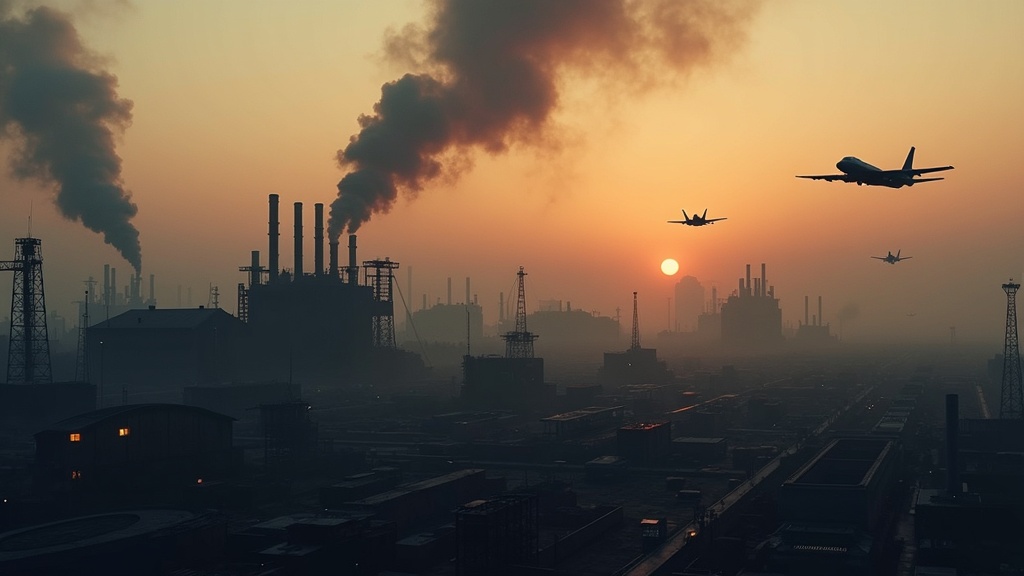
Israel Hits Uranium Plant — Diplomacy Collapses in Real Time
On March 27, 2026, Israel struck a uranium processing facility in Yazd, central Iran, and confirmed the operation publicly. This is escalation dressed as precision — Israel called the plant unique to Iran’s nuclear infrastructure. Iran’s Atomic Energy Organization confirmed the hit but reported no casualties or radiation leaks. The same wave of strikes hit the Khondab Heavy Water Complex, two major steel plants in Khuzestan and Isfahan, and areas around Tehran, Kashan, Ahwaz, and Qom. Eighteen people died in Qom alone. More than 1,900 have been killed since the US-Israeli campaign began on February 28, 2026. Israeli Defence Minister Israel Katz said the campaign would intensify. IRGC Aerospace Commander Seyed Majid Moosavi warned the equation would no longer be eye-for-an-eye, urging employees of US and Israeli-linked firms across the region to evacuate immediately. For investors, this is the signal: talks are theater. Israel is moving ahead with kinetic objectives while Washington holds the diplomatic spotlight. Energy infrastructure, industrial capacity, and now nuclear sites are all fair game. Any pause will be tactical, not strategic.
Washington Sets April 6 Deadline — Tehran Calls It Unfair
On March 26, 2026, US President Donald Trump announced he had delayed planned strikes on Iran’s energy infrastructure by 10 days, pushing the target date to April 6, 2026. He said negotiations were going very well. Iranian officials rejected that characterization outright, calling Washington’s 15-point peace proposal one-sided and unfair. Iran outlined its own demands: war reparations and recognition of Iranian control over the Strait of Hormuz, the waterway responsible for roughly one-fifth of global oil supply. An Iranian official said simultaneous strikes and talks were intolerable. US Secretary of State Marco Rubio, speaking after G7 talks in France, said he expected the operation to wrap up in weeks, not months. He confirmed Washington has not yet received Iran’s formal response and is waiting for clarification on negotiation details — who, what, where, when. Pakistan is relaying messages, with Turkey and Egypt supporting mediation. For operators, the timeline is clear: April 6 is the next inflection point. Energy prices will remain elevated. Any tanker entering or exiting the Strait of Hormuz will need escort or insurance premiums that reflect war-zone risk.
Iran Closes Strait of Hormuz — G7 Warns of Global Impact
On March 27, 2026, Iran’s Revolutionary Guard turned back three ships attempting to transit the Strait of Hormuz, declaring the waterway closed to vessels heading to or from ports linked to its enemies. Iran’s ambassador to the United Nations later said Tehran agreed to expedite humanitarian aid shipments through the strait. Secretary Rubio called Iran’s plan to impose tolls illegal, unacceptable, and dangerous to the world, saying he found broad G7 support for confronting the move. France proposed a tanker escort system once fighting subsides. The United Nations announced a task force to create a new mechanism for moving fertilizer and related raw materials through the strait. The World Food Programme warned the conflict could push the number of food-insecure people globally to 363 million, up from a pre-war baseline of 318 million, as rising energy prices drive food costs higher. Low-income countries will bear the heaviest burden. For investors, this is not a headline risk — this is a structural shift. The Strait of Hormuz is no longer a neutral corridor. Any company with supply chains touching the Persian Gulf must model for permanent disruption or permanent cost escalation.
Tehran Under Armed Patrols — Economy and Internet Collapse
On March 27, 2026, Tehran remained under heavy armed patrols by state forces, including masked paramilitaries wielding assault rifles and machine guns mounted on pickup trucks. Checkpoints operated by the Basij paramilitary force of the Islamic Revolutionary Guard Corps (IRGC), police, and plainclothes units are often on the move after multiple deadly drone strikes over the past two weeks. State-backed gatherings at mosques and city squares continue, as Iranian authorities encourage supporters to maintain control on the streets. The IRGC’s deputy for cultural affairs in Tehran said the age limit for participants in security patrols has been lowered to 12 years. The internet remains completely blocked to the civilian population for nearly a month, the longest recorded shutdown in Iran. The economy, already plagued by roughly 70 percent inflation, is further squeezed. President Masoud Pezeshkian visited a Tehran hypermarket on March 27, 2026, to ensure essential goods remain available and vendors avoid price gouging. Iranian authorities warned that anyone protesting the establishment during the war will be treated as an enemy. Multiple war-related executions, hundreds of arrests, and asset seizures have been announced. For investors, Iran is now operationally inaccessible. No internet means no digital commerce, no supply chain visibility, no customer engagement. Any exposure to Iranian counterparties is stranded capital.
Capital moves fastest when the story changes, not when the story ends. Israel just hit two civilian nuclear facilities while Washington insists talks are productive. Iran closed the Strait of Hormuz and demanded toll payments. The US delayed strikes on energy infrastructure but deployed thousands more troops to the region and set April 6 as the new target date. Secretary Rubio said the war would end in weeks, not months — but Israel’s defence minister said the campaign would intensify. These are contradictory signals, and contradictions are where risk hides. Energy prices will stay elevated. Supply chains touching the Persian Gulf are now priced for disruption or escort. Any company with Iranian exposure is holding stranded capital. The next two weeks will clarify whether this ends with a deal or a ground invasion. Position accordingly.
If this was useful, drop a like or comment below. More signal, less noise — every time.

AI Ludens — a creator who works with AI as if it were play.
“Ludens” is Latin for “the one who plays,”
borrowed from Johan Huizinga’s Homo Ludens.
I believe creation alongside AI is meaningful play.
Using n8n, Claude Code, and Google Cloud,
I design and operate content automation pipelines
that grow wiser with every iteration.
I build and run multiple automated media properties,
including worldsignal.site, worldbriefed.world,
and the YouTube channel “500-Year Protocol.”
From publishing to video production,
everything runs as an automated system — built with AI, beside AI.
Each article is reviewed and edited by AI Ludens before publishing to ensure factual accuracy and editorial quality
Leave a Reply