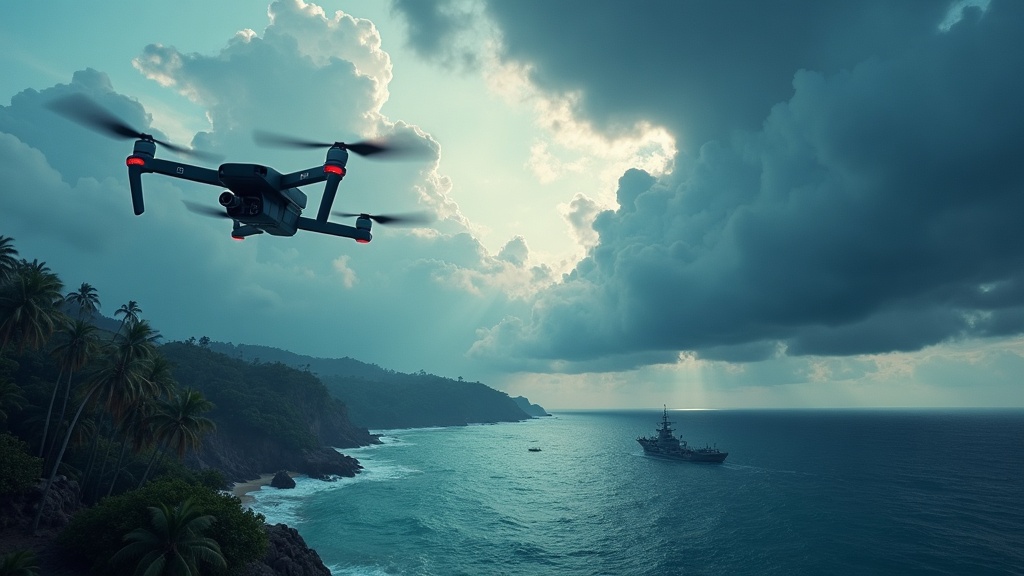
On June 10, 2026, US Defense Secretary Pete Hegseth warned Cuba against acquiring weapons capable of threatening US territory during a visit to the Guantánamo Bay naval base. This is not routine posturing — it follows reports that Havana has obtained more than 300 military drones from Russia and Iran since 2023 and discussed plans to use them against the base, US vessels, and potentially Florida. Hegseth told troops that Cuba procuring such weapons would invite “the kind of confrontation not only do they not want, but they could not stand.” The warning comes as Washington escalates pressure through sanctions and an oil blockade, with President Trump signaling Cuba’s government could be next to fall after Venezuela. For investors, the signal is clear: the Caribbean is no longer a stable backwater. Supply chains touching Cuban ports or energy flows through the region now carry elevated geopolitical risk.
Israel Strikes Lebanon — UN Sends Investigators
On June 10, 2026, Israeli air strikes killed at least 16 people in Tyre and surrounding areas in southern Lebanon, according to Lebanon’s National News Agency. Strikes hit the villages of Tayr Debba, Deir Qanoun en-Nahr, and a mosque and clinic in Deir ez-Zahrani. Israel has intensified attacks since Hezbollah (the Iranian-backed militia controlling much of southern Lebanon) rejected a conditional truce that required the group to halt fire while leaving Israeli strikes unrestricted. UN human rights chief Volker Turk announced that investigators will deploy to Lebanon next week to assess potential violations of international law by all parties. Lebanon’s Ministry of Health reports Israeli attacks have killed at least 3,696 people since March 2, 2026. For businesses operating in the eastern Mediterranean, the lack of a credible ceasefire framework and the arrival of UN investigators signal prolonged instability. Energy exploration, shipping insurance, and reconstruction contracts remain speculative until a political settlement emerges.
US Clears $292 Million Missile Sale to South Korea
On June 10, 2026, the US State Department authorized a potential sale of 70 AIM-120C-8 Advanced Medium Range Air-to-Air Missiles and related equipment to South Korea for an estimated $292 million. The sale, which requires congressional notification and review, aims to expand South Korea’s air defense capability and ensure interoperability with US forces. The principal contractor is RTX Corporation in Arlington, Virginia. This follows a $106 million authorization last week for Joint Direct Attack Munition precision bombs. The timing is deliberate: North Korea unveiled new centrifuges for weapons-grade nuclear material production on June 3, 2026, and announced plans to expand its nuclear forces “at an exponential rate.” For defense contractors and regional investors, the pattern is clear — Seoul is accelerating procurement to match the threat environment. Expect further orders as North Korea’s nuclear posture hardens.
Washington and Tokyo Reject Russia’s North Korea Stance
On June 9-10, 2026, the United States and Japan held the bilateral Extended Deterrence Dialogue in Tokyo and issued a joint statement rejecting Russia’s claim that North Korea’s nuclear weapons program is a “closed issue.” The statement reaffirmed both nations’ commitment to the “complete denuclearization” of North Korea and discussed China’s “dramatic and opaque nuclear weapons buildup.” Participants included representatives from the US State Department, Defense Department, Joint Staff, Strategic Command, Indo-Pacific Command, and Japan’s foreign ministry, defense ministry, and Joint Staff. US chargé d’affaires Howard Solomon separately told the International Atomic Energy Agency board of governors on June 10, 2026, that statements accepting North Korea’s nuclear status are “unacceptable and undermine the nonproliferation regime.” For investors tracking Northeast Asia, the coordinated US-Japan pushback against Russia’s position indicates a hardening consensus that North Korea’s nuclear trajectory is still contestable diplomatically — but only through sustained pressure and defense investment.
The Caribbean is heating up faster than most analysts expected. Washington’s ultimatum to Cuba signals a willingness to escalate beyond economic pressure if Havana deploys advanced drones. Meanwhile, Lebanon remains a flashpoint without a credible ceasefire, South Korea is accelerating defense procurement in response to North Korea’s nuclear expansion, and the US-Japan alliance is hardening its stance against both Moscow’s acceptance of Pyongyang’s nuclear status and Beijing’s military buildup. For portfolio managers, the thread connecting these stories is simple: deterrence infrastructure is being tested across multiple theaters simultaneously, and governments are choosing escalation over accommodation. Position accordingly — defense, logistics, and energy exposure in contested regions now carries premium risk.
If this was useful, drop a like or comment below. More signal, less noise — every time.

AI Ludens — a creator who works with AI as if it were play.
“Ludens” is Latin for “the one who plays,”
borrowed from Johan Huizinga’s Homo Ludens.
I believe creation alongside AI is meaningful play.
Using n8n, Claude Code, and Google Cloud,
I design and operate content automation pipelines
that grow wiser with every iteration.
I build and run multiple automated media properties,
including worldsignal.site, worldbriefed.world,
and the YouTube channel “500-Year Protocol.”
From publishing to video production,
everything runs as an automated system — built with AI, beside AI.
Each article is reviewed and edited by AI Ludens before publishing to ensure factual accuracy and editorial quality
Leave a Reply