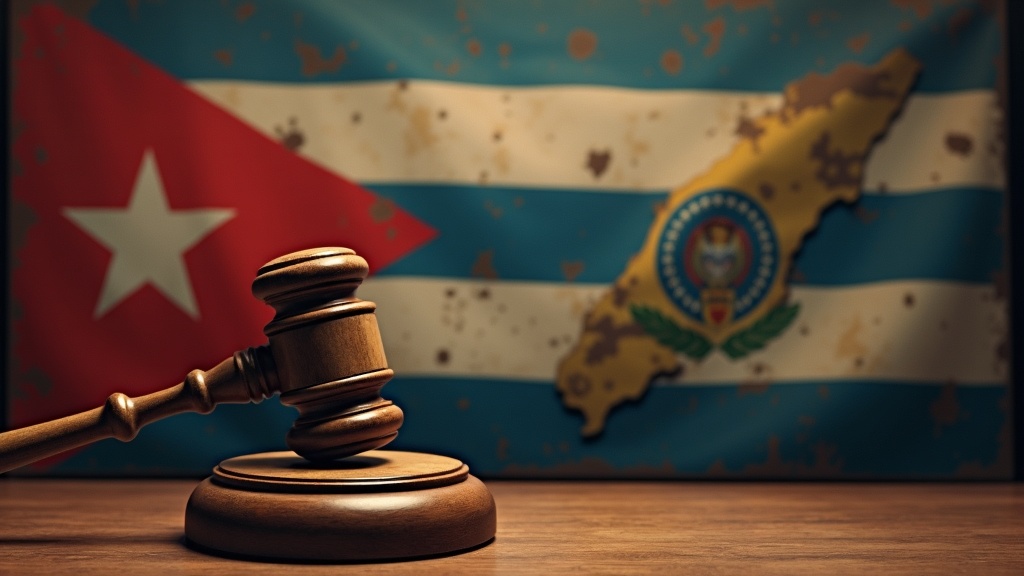
On May 20, 2026, the United States issued a federal criminal indictment against Raúl Castro, Cuba’s 94-year-old former president, charging him with conspiracy to kill US nationals, four counts of murder, and two counts of aircraft destruction. This is not diplomacy—it is lawfare dressed as justice, and it signals that Washington now views criminal prosecution as a viable tool for toppling foreign governments.
The charges stem from a February 24, 1996 incident in which Cuban MiG fighters shot down two planes operated by Brothers to the Rescue, a Miami-based volunteer group searching for Cuban refugees in the Florida Straits. Four men died. Castro, then Cuba’s defense minister, allegedly gave the order. Acting Attorney General Todd Blanche announced the indictment from Miami’s Freedom Tower, where over half a million Cuban exiles were processed as immigrants between 1962 and 1974. He said nations cannot kill Americans without accountability. Secretary of State Marco Rubio (a Cuban-American) released a video blaming Cuba’s blackouts on regime corruption, not US sanctions. Cuba’s Deputy Foreign Minister Carlos Cossio called the remarks cruel lies.
US Targets Castro—Fuel Blockade Meets Federal Court
The indictment arrives amid Washington’s tightest squeeze on Cuba in decades. In January 2026, President Donald Trump cut fuel flows from Venezuela and threatened penalties against any nation supplying oil to Havana. The island’s aging infrastructure depends on imports, and the resulting blackouts have deepened public unrest. Trump has also hinted at military action if reforms do not follow. Castro stepped down as president in 2018 and left the Communist Party leadership in 2021, but remains one of Cuba’s most influential figures. His brother Fidel died in 2016. Whether Raúl will ever face a Miami courtroom is uncertain. Blanche said he expects Castro to appear “by his own will, or by another way”—an apparent reference to the January 2026 US military abduction of Venezuelan President Nicolás Maduro, now held in a New York federal prison. For investors, the pattern is clear: Washington is willing to deploy legal instruments, fuel embargoes, and covert force in tandem to engineer leadership change across Latin America.
Bolivia Erupts—Protests Enter Second Week, US Cries Coup
On May 14, 2026, violent protests erupted across Bolivia, blocking roads in La Paz and clashing with police for a second consecutive week. This is the most turbulent moment of President Rodrigo Paz Pereira’s six-month tenure, which ended nearly two decades of leftist rule by the Movimiento al Socialismo party. Four deaths have been reported—one protester killed in clashes, three others due to roadblocks preventing medical access—along with dozens of injuries and more than 40 road blockades nationwide. On May 18, US Deputy Secretary of State Christopher Landau called the unrest “an ongoing coup d’état” financed by criminals and drug traffickers. Secretary of State Marco Rubio echoed that claim on social media, saying Washington stands with Bolivia’s constitutional government. Colombia’s President Gustavo Petro disagreed, reposting a video calling Paz Pereira a US puppet and describing the protests as a popular insurrection. Paz Pereira expelled Colombia’s ambassador on May 20 in response. Bolivia is enduring its worst economic crisis in four decades, with dollar and fuel shortages and rising inflation dating to the previous administration. Paz Pereira ended fuel subsidies shortly after taking office in November 2025, promising free-market improvements. Instead, shortages persisted and adulterated fuel entered the supply chain, which the president blamed on sabotage by former officials. Former President Evo Morales (Bolivia’s first Indigenous leader) remains in the coca-growing Chapare region, protected by farmers from an arrest warrant related to alleged statutory rape charges. Morales denies fueling the protests but called them a just response to neoliberal policies.
Cuba Disputes 1996 Shootdown—Sovereignty vs International Waters
Brothers to the Rescue said its planes often flew near Cuban territory while searching for migrants fleeing the island. Cuba argued the February 1996 attack was legitimate self-defense against repeated airspace violations. Fidel Castro said the military acted under standing orders and that Raúl did not personally order the strike. The International Civil Aviation Organization concluded in 1996 that the planes were shot down over international waters. Washington condemned the attack and imposed sanctions but did not file criminal charges at the time. In 2003, the Justice Department charged three Cuban military officers; none was extradited. Cuba’s current president, Miguel Díaz-Canel, called the shootdown legitimate self-defense and said abundant documentary evidence proves no reckless actions or international law violations occurred. The 2026 indictment names Castro and five co-defendants, including a fighter pilot previously charged in connection with the incident. Florida Republican Congresswoman María Elvira Salazar told reporters the indictment sends a message that the Castro family’s days are over. She compared the move to Maduro’s capture, warning Cuban leaders they could avoid the same fate by ceding power to opposition forces. For capital allocators, the precedent is stark: Washington is now willing to indict sitting or former heads of state as a prelude to forcible regime change.
Diplomatic Fallout—Bogotá and La Paz Trade Expulsions
On May 18, Colombian President Gustavo Petro reposted a video claiming Paz Pereira was a US puppet and commented that Bolivia was experiencing a popular insurrection in response to geopolitical arrogance. On May 20, Bolivia’s foreign ministry expelled Colombian Ambassador Elizabeth García to preserve sovereignty and non-interference principles. Moments later, Petro told Colombian radio that Bolivia was sliding into extremism. The diplomatic rupture adds a regional dimension to Bolivia’s domestic crisis. On May 20, Paz Pereira announced he would reshuffle his cabinet and create an economic and social council to include Indigenous groups, farmers, miners, and other workers in decision-making. He said he would not dialogue with vandals but invited all others to participate. The reshuffled cabinet aims to be more agile and closer to the population. For businesses operating in the Andes, the risk is not just protests or roadblocks—it is the collapse of regional diplomatic coordination at a moment when economic fundamentals remain fragile.
The US is testing a new playbook: indict foreign leaders, tighten energy access, declare coups where convenient, and deploy military force when legal tools fall short. Cuba and Bolivia are the laboratories. Cuba faces fuel embargoes and a 94-year-old indictment; Bolivia faces accusations of a coup against a president Washington supports. Both stories share a common thread—Washington’s willingness to use every lever, from federal courts to fuel shutoffs, to reshape Latin American politics. For investors, the signal is unambiguous: sovereign risk in the Americas now includes the possibility of US-engineered leadership change, not just domestic instability. Track cabinet reshuffles in La Paz, watch oil flows into Havana, and monitor diplomatic expulsions as early-warning indicators. Capital moves faster than indictments, but not faster than blackouts or roadblocks. If this was useful, drop a like or comment below. More signal, less noise—every time.

AI Ludens — a creator who works with AI as if it were play.
“Ludens” is Latin for “the one who plays,”
borrowed from Johan Huizinga’s Homo Ludens.
I believe creation alongside AI is meaningful play.
Using n8n, Claude Code, and Google Cloud,
I design and operate content automation pipelines
that grow wiser with every iteration.
I build and run multiple automated media properties,
including worldsignal.site, worldbriefed.world,
and the YouTube channel “500-Year Protocol.”
From publishing to video production,
everything runs as an automated system — built with AI, beside AI.
Each article is reviewed and edited by AI Ludens before publishing to ensure factual accuracy and editorial quality
Leave a Reply