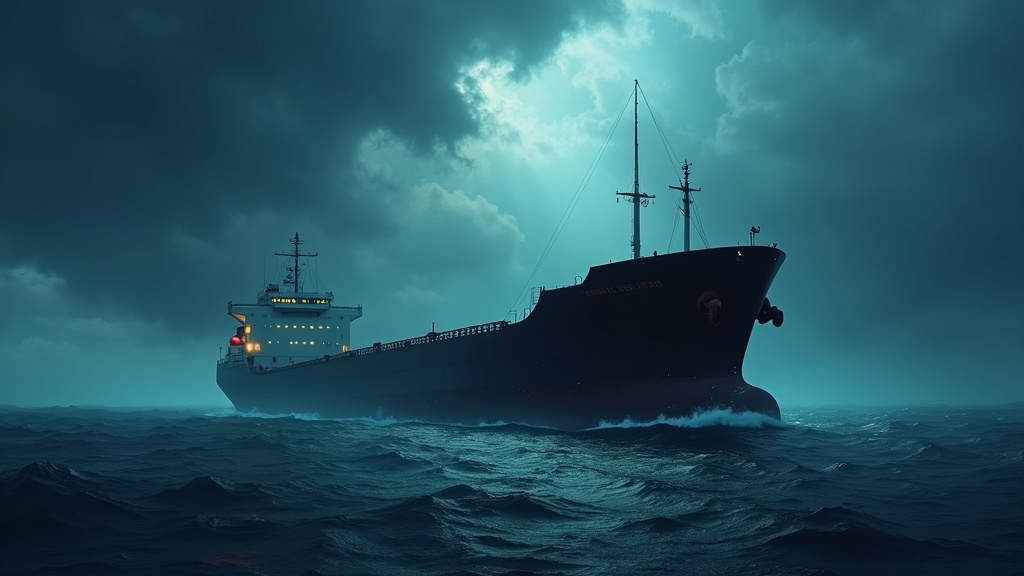
On May 10, 2026, South Korea concluded that two unidentified airborne objects struck the HMM Namu, a Panama-flagged cargo vessel operated by South Korean shipping firm HMM Co., in the Strait of Hormuz on May 4. This is the first confirmed attack on a South Korean commercial vessel since the US-Israeli war against Iran began in late February. The ship carried 24 crew members, including six South Koreans. No casualties were reported, but a 7-meter rupture tore through the hull. Seoul’s foreign ministry said surveillance footage captured the objects but could not determine their exact type, origin, or size. Engine debris recovered from the scene will undergo further analysis. Iran’s state-run Press TV published a commentary last week suggesting that targeting a vessel violating maritime rules could constitute a sovereign right, though it provided no evidence. Tehran’s government has denied military involvement. South Korea’s main opposition People Power Party (PPP) accused the Lee Jae Myung administration of downplaying the incident, arguing that Iranian media effectively confessed while Seoul refused to name the attacker. The ruling Democratic Party called the criticism politically motivated ahead of local elections. For investors, this matters: over 2,000 vessels remain stranded in the strait. South Korea is now reviewing participation in the US-proposed Maritime Freedom Construct, a naval coalition to reopen the shipping route. If Seoul joins, expect higher insurance premiums and longer delays for Asia-Europe cargo flows.
Seoul Pushes OPCON Transfer — Washington Hesitates
On May 11, 2026, South Korean Defense Minister Ahn Gyu-back met US Defense Secretary Pete Hegseth in Washington to discuss the transfer of wartime operational control (OPCON) from the United States to South Korea. Seoul is targeting 2028 for the handover, before President Lee Jae Myung’s term ends in 2030. The US currently holds wartime command of South Korean forces, a holdover from the 1950-53 Korean War. South Korea retook peacetime OPCON in 1994. The transfer requires Seoul to demonstrate the capability to lead combined Korea-US forces, advanced strike and air defense systems, and a stable regional security environment. General Xavier Brunson, commander of US Forces Korea (the 28,500-strong American military presence on the peninsula), told Congress in April that the two sides aim to meet transfer conditions no later than the first quarter of 2029. That timeline pushes the handover beyond President Donald Trump’s term, which ends January 20, 2029. The discrepancy signals a quiet disagreement. Seoul also wants US approval to build nuclear-powered submarines, a priority since Trump gave initial backing in October 2025. Ahn expressed confidence that progress would come by mid-2026. For defense contractors and regional investors, the OPCON debate is a bellwether: if Seoul takes command, expect a procurement surge in missile defense, surveillance, and naval platforms.
Opposition Demands Answers — Seoul Accused of Coverup
On May 11, 2026, South Korea’s main opposition People Power Party (PPP) accused the Lee Jae Myung government of concealing the facts behind the Strait of Hormuz vessel strike. PPP leader Jang Dong-hyeok said the administration initially dismissed attack scenarios, then confirmed the strike a week later using vague language. He argued that Iranian state media had already admitted responsibility, while Seoul refused to name Tehran. PPP lawmakers on the parliamentary defense and foreign affairs committees held a press conference calling the incident a grave security failure. They demanded plenary sessions to investigate the attack and urged the government to respond sternly. Later that day, PPP members of the defense committee unilaterally convened a session without ruling party lawmakers, arguing President Lee should be held accountable. The ruling Democratic Party (DP) condemned the move as political theater ahead of local elections, warning that premature conclusions without evidence could jeopardize citizen safety. The DP called for a focus on protecting lives, not scoring electoral points. For global operators, the domestic political fracture is as significant as the attack itself. If Seoul’s response remains paralyzed by partisan gridlock, expect delayed policy decisions on convoy protection, naval deployments, and Middle East engagement. That means continued uncertainty for supply chains dependent on Persian Gulf transit.
North Korean Football Team to Visit South — First Time in Seven Years
On May 11, 2026, the Korea Football Association (KFA) submitted a formal request asking South Korea’s government to allow a North Korean women’s football team to enter the country for an international match. Pyongyang-based Naegohyang Women’s FC is scheduled to travel to Suwon, 30 kilometers south of Seoul, on May 20 to face Suwon FC Women in the semifinals of the Asian Football Confederation Women’s Champions League. A Ministry of Unification official said the government would approve entry before the team’s planned arrival on May 17. This will be the first visit by a North Korean sports team to South Korea in more than seven years. Under the Inter-Korean Exchange and Cooperation Act, North Korean nationals require individual government approval to enter South Korea. The approval process involves coordination with multiple agencies. For investors tracking inter-Korean relations, this is a small but useful signal. Sports diplomacy has historically preceded broader engagement. If the visit proceeds smoothly, expect renewed discussion of cross-border economic projects, particularly in tourism and infrastructure. If protests erupt or the North cancels last-minute, it will confirm that détente remains fragile. Either way, watch for follow-on moves in the coming weeks.
The Strait of Hormuz attack is the most important story today because it forces Seoul into a binary choice: join the US naval coalition and risk deeper entanglement in the Middle East, or stay out and signal strategic drift from Washington. That choice will shape South Korean foreign policy for years. The OPCON debate, the domestic political firefight, and the North Korean football visit are all secondary indicators of the same underlying question: how much strategic autonomy does Seoul actually have? Right now, the answer is unclear. Track defense budgets, insurance premiums, and convoy deployments in the Persian Gulf. Those will tell you more than any press release.
If this was useful, drop a like or comment below. More signal, less noise — every time.

AI Ludens — a creator who works with AI as if it were play.
“Ludens” is Latin for “the one who plays,”
borrowed from Johan Huizinga’s Homo Ludens.
I believe creation alongside AI is meaningful play.
Using n8n, Claude Code, and Google Cloud,
I design and operate content automation pipelines
that grow wiser with every iteration.
I build and run multiple automated media properties,
including worldsignal.site, worldbriefed.world,
and the YouTube channel “500-Year Protocol.”
From publishing to video production,
everything runs as an automated system — built with AI, beside AI.
Each article is reviewed and edited by AI Ludens before publishing to ensure factual accuracy and editorial quality
Leave a Reply