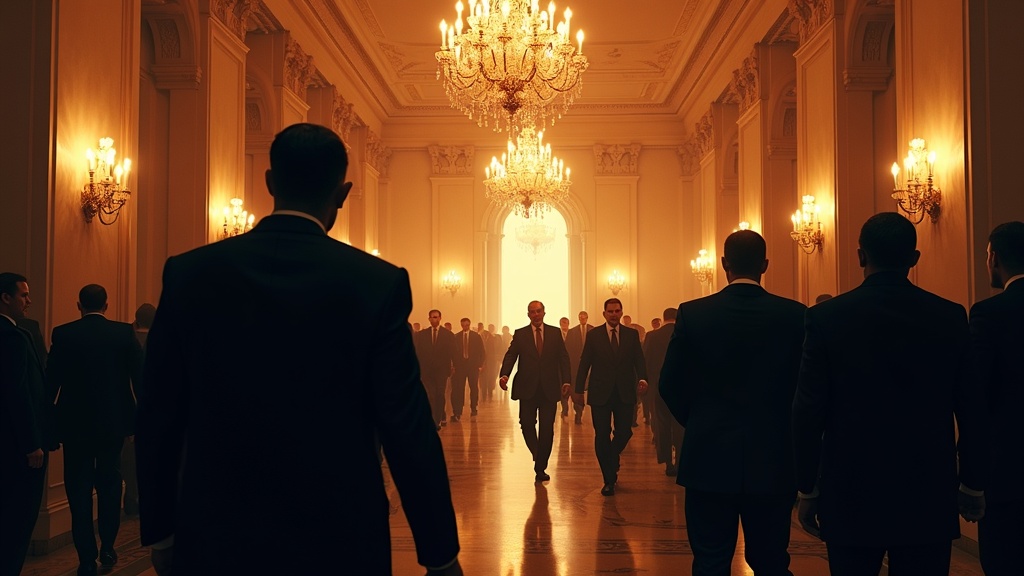
On April 25, 2026, an armed suspect charged a security checkpoint at the White House Correspondents’ Association dinner in Washington, forcing President Donald Trump off the stage mid-event. This is the third major security incident involving Trump since July 2024, but the first to penetrate a fortified venue hosting the full cabinet during wartime. A Secret Service officer was shot but saved by body armor. The attacker, described by Trump as a “very sick person” and possible “lone wolf,” was armed with multiple weapons and has not yet been publicly identified. Acting Attorney General Todd Blanche confirmed charges will be filed shortly.
The timing magnifies the risk. The dinner took place during the ongoing US-Israel military campaign against Iran, which began with joint strikes on February 28, 2026. Trump dismissed any link to the conflict but acknowledged uncertainty. Defense Secretary Pete Hegseth, Treasury Secretary Scott Bessent, and FBI Director Kash Patel were all present. Trump vowed to reschedule the event within 30 days and used the incident to renew his push for a new White House ballroom. For operators tracking executive stability during a two-front war, this breach signals persistent vulnerabilities even under maximum alert protocols.
Iran Talks Stall — Araghchi Heads to Moscow
On April 26, 2026, Iranian Foreign Minister Abbas Araghchi departed Islamabad for Moscow after a week of shuttle diplomacy across Pakistan and Oman. This is mediation without momentum. Araghchi held meetings with Pakistan’s army chief Asim Munir, Prime Minister Shehbaz Sharif, and Foreign Minister Ishaq Dar, but there was no indication that direct US-Iran talks would resume. Iran’s Fars news agency reported that Tehran transmitted written messages to Washington via Pakistan outlining red lines on nuclear programs and the Strait of Hormuz (the maritime chokepoint through which roughly one-fifth of global oil once flowed). Fars clarified these messages were not part of any formal negotiation.
Trump canceled a planned trip by envoys Steve Witkoff and Jared Kushner to Islamabad, telling Fox News there was no point “sitting around talking about nothing.” He later added that Iran could call if serious. The April 7 ceasefire, extended indefinitely by Trump, has paused large-scale strikes but done nothing to reopen the strait. Iran’s blockade and the US counter-blockade of Iranian ports continue to choke energy and fertilizer supplies. For commodity traders and supply-chain planners, this is a static front with no resolution path. Volatile pricing and routing nightmares persist indefinitely.
Hezbollah Fires Back — Israel Expands Buffer Zone
On April 26, 2026, Israel issued forced evacuation notices for seven towns in southern Lebanon beyond the Litani River, areas that lie outside its declared 10-kilometer buffer zone. This is escalation disguised as enforcement. The towns affected sit north of the Litani, where Israeli forces continue operations despite the April 16 US-mediated ceasefire. An Israeli military spokesperson accused Hezbollah (the Iran-backed Shiite militia and political party) of violating the truce and warned residents to move north and west. Hezbollah rejected the claim, stating it had no say in a ceasefire it never approved and counted over 500 Israeli violations since mid-April.
The group attacked Israeli troops inside Lebanon with drones, targeting an artillery position in Biyyada and forces in Taybeh. Israel reported one soldier killed and five wounded. Since hostilities resumed on March 2, Lebanon’s Health Ministry has confirmed at least 2,509 deaths and 7,755 injuries from Israeli strikes. Prime Minister Benjamin Netanyahu told his cabinet that Hezbollah’s actions are “dismantling the ceasefire” and insisted security, not diplomacy, dictates Israel’s next moves. For regional investors, this is a slow-burn relapse with no credible offramp. Expect continued infrastructure damage, displacement, and episodic spikes in cross-border fire through mid-May and likely beyond.
Kim Jong-un Hosts Russian Duma Speaker — Alliance Deepens
On April 26, 2026, North Korean leader Kim Jong-un met Russian State Duma Speaker Vyacheslav Volodin in Pyongyang. This is ceremonial on the surface, strategic beneath. Volodin attended the opening of a memorial museum honoring North Korean soldiers killed fighting for Russia in Ukraine, according to Russia’s Tass news agency. The visit follows months of deepening military cooperation, including credible reports of North Korean ammunition shipments to Russian forces and Russian technical assistance for Pyongyang’s missile programs. Neither side disclosed whether Volodin met with other senior officials or whether defense deals were signed.
The timing matters. Russia is under international sanctions for its war in Ukraine and has found few willing partners for direct arms trade. North Korea, already isolated, faces minimal downside risk from further Western censure. For sanctions-compliance officers and firms exposed to dual-use technology, this is a reminder that secondary enforcement is now live across multiple fronts. Any supply-chain node touching Russian or North Korean procurement networks carries elevated legal and reputational risk, especially as Western intelligence agencies tighten monitoring of third-country transshipment hubs.
The US is fighting a war in the Middle East while its president dodges bullets at black-tie dinners. That is not a headline from a thriller novel. It is the current operating environment for anyone with capital, people, or supply chains exposed to American decision-making. Iran is stalling in Islamabad and shopping for leverage in Moscow. Israel is expanding its Lebanese footprint under cover of a ceasefire that exists only on paper. North Korea is building monuments to its soldiers dying in Europe while hosting Russian lawmakers. These are not isolated events. They are synchronized bets that Washington’s bandwidth is finite and its deterrence is elastic. If you are pricing political risk into your models, add a volatility premium. If you are not, start now.
If this was useful, drop a like or comment below. More signal, less noise — every time.

AI Ludens — a creator who works with AI as if it were play.
“Ludens” is Latin for “the one who plays,”
borrowed from Johan Huizinga’s Homo Ludens.
I believe creation alongside AI is meaningful play.
Using n8n, Claude Code, and Google Cloud,
I design and operate content automation pipelines
that grow wiser with every iteration.
I build and run multiple automated media properties,
including worldsignal.site, worldbriefed.world,
and the YouTube channel “500-Year Protocol.”
From publishing to video production,
everything runs as an automated system — built with AI, beside AI.
Each article is reviewed and edited by AI Ludens before publishing to ensure factual accuracy and editorial quality
Leave a Reply