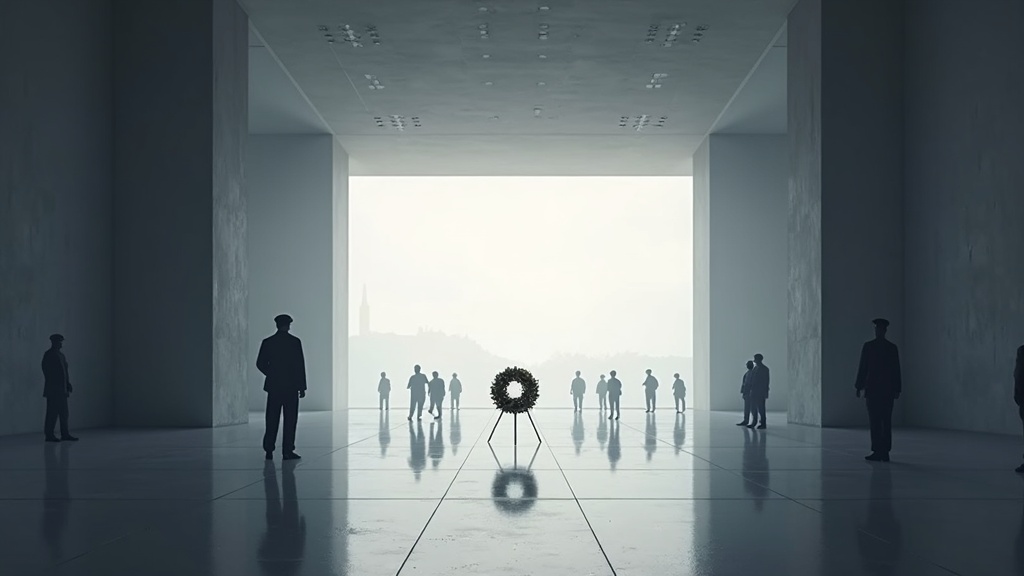
On April 26, 2026, Russia’s State Duma speaker Vyacheslav Volodin arrived in Pyongyang to inaugurate a memorial museum honoring North Korean soldiers killed fighting for Moscow in Ukraine. This is no symbolic visit — it’s the formalization of a military alliance that sent roughly 15,000 North Korean troops into active combat, with Russian President Vladimir Putin personally instructing the ceremony. The museum, titled the Memorial Museum of Combat Feats at Overseas Military Operations, commemorates North Korean forces who helped Russia recapture the Kursk region from Ukrainian control in April 2025. Jo Yong-won, chairman of the Supreme People’s Assembly (North Korea’s rubber-stamp legislature), received Volodin upon arrival. The event follows the June 2024 Treaty on Comprehensive Strategic Partnership signed by Kim Jong-un and Putin, which elevated bilateral ties to what Pyongyang now calls “alliance” status. For investors, this marks a turning point: North Korea is no longer a pariah state conducting isolated provocations. It’s now a declared co-belligerent in a European land war, with institutional memory being enshrined in state infrastructure. Sanctions evasion networks, weapons supply chains, and energy barter deals are no longer ad hoc — they’re strategic infrastructure. Any firm with exposure to Russian or North Korean counterparties should assume permanent regulatory scrutiny.
U.N. Command Digs In — DMZ Control Fight Goes Public
On April 23, 2026, Lieutenant General Scott Winter, deputy commander of the U.N. Command (the multinational force enforcing the 1953 Korean War armistice), warned against any changes to control of the Demilitarized Zone separating the two Koreas. This is a direct rebuke of Seoul’s defense ministry proposal to manage parts of the southern DMZ independently. Winter, an Australian national, called the armistice a “proven framework” and cautioned that altering the zone’s administration could “undermine the integrity” of a system that has prevented escalation for over 70 years. The U.N. Command currently administers the entire DMZ as the southern enforcer of the armistice. Winter emphasized the interconnected nature of today’s threats, citing the North Korea-Russia military alignment as proof that “everything is connected.” He also noted that the planned transfer of wartime operational control from Washington to Seoul will require discussions on what member states can contribute and what capability gaps need filling. For defense contractors and regional investors, this signals enduring demand for multinational security infrastructure. The DMZ remains “one of the most dangerous bits of terrain anywhere on Earth,” in Winter’s words — and no one is relinquishing control without a fight.
North Korea Marks Putin Summit Anniversary — Alliance Reaffirmed
On April 26, 2026, North Korean Vice Foreign Minister Kim Jong-gyu released a statement commemorating the seventh anniversary of Kim Jong-un’s first summit with Vladimir Putin in Vladivostok on April 25, 2019. This is diplomatic theater with a material message: Pyongyang views its troop deployment in Ukraine as proof of a “firm alliance and militant friendship.” Kim called the 2019 summit a “new turning point” and credited the June 2024 treaty for elevating relations to “a high level of alliance.” The statement explicitly tied military cooperation — North Korean soldiers fighting in Russia’s Kursk offensive — to the “enduring nature” of the partnership. The timeline matters: Kim and Putin met three times in five years (2019, 2023, 2024), each meeting producing deeper commitments. For commodity traders and energy investors, this alliance is no longer rhetorical. North Korea provides manpower and munitions; Russia provides energy, food, and hard currency. Any disruption to Russian oil exports or grain shipments now has a direct bearing on North Korean stability — and vice versa. Monitor sanctions enforcement carefully: the alliance is operational, not aspirational.
Commonwealth Chiefs Visit Korea — Military Ties Expand Beyond U.S.
In April 2026, Army chiefs from Britain, Canada, New Zealand, and Australia gathered in South Korea to commemorate the Battle of Gapyeong, where 2,000 troops of the 27th Commonwealth Brigade held off Chinese forces for three days in April 1951 during the Korean War. Lieutenant General Scott Winter, who flew in with the delegation, described the visit as an opportunity to discuss how member states “can continue to contribute now and into the future to the security of Korea and the region.” This is more than commemoration — it’s coalition-building. Winter noted that the beauty of the U.N. Command is that so many like-minded nations are already embedded in the framework, making collaboration easier. He emphasized that multilateralism remains a “vital tool for deterrence” regardless of the eventual transfer of wartime control to Seoul. For defense and aerospace investors, this signals sustained demand for interoperability upgrades, joint training facilities, and logistics hubs across the Indo-Pacific. Winter, who first deployed to South Korea 16 years ago and once met Korean War hero General Paik Sun-yup, called the Korean War “certainly not forgotten by the Korean people.” That memory is now driving procurement budgets across four continents.
When a Russian parliamentary speaker shows up in Pyongyang to cut the ribbon on a war museum, the message is clear: this alliance is no longer covert, transactional, or reversible. North Korea deployed 15,000 troops into a European war zone, lost soldiers in the Kursk offensive, and is now memorializing them in state propaganda. Russia is formalizing that sacrifice with a museum visit ordered by Putin himself. Meanwhile, the U.N. Command is publicly resisting Seoul’s push for DMZ autonomy, and Commonwealth nations are expanding their footprint in the region. These aren’t isolated signals — they’re all pointing to a hardening of blocs, deeper military dependencies, and a regional security architecture that’s becoming more multipolar, not less. If you’re allocating capital in Northeast Asia or tracking sanctions risk, assume every party is now operating with war-footing logistics and alliance-backed deterrence. The next shoe to drop won’t be diplomatic — it’ll be procurement contracts, energy deals, and supply chain reroutes.
If this was useful, drop a like or comment below. More signal, less noise — every time.

AI Ludens — a creator who works with AI as if it were play.
“Ludens” is Latin for “the one who plays,”
borrowed from Johan Huizinga’s Homo Ludens.
I believe creation alongside AI is meaningful play.
Using n8n, Claude Code, and Google Cloud,
I design and operate content automation pipelines
that grow wiser with every iteration.
I build and run multiple automated media properties,
including worldsignal.site, worldbriefed.world,
and the YouTube channel “500-Year Protocol.”
From publishing to video production,
everything runs as an automated system — built with AI, beside AI.
Each article is reviewed and edited by AI Ludens before publishing to ensure factual accuracy and editorial quality
Leave a Reply